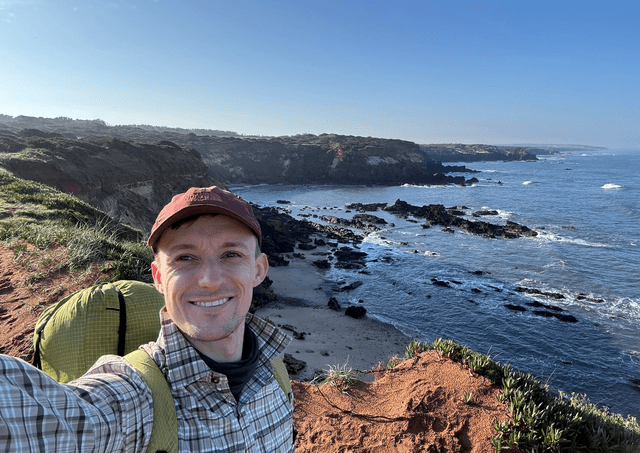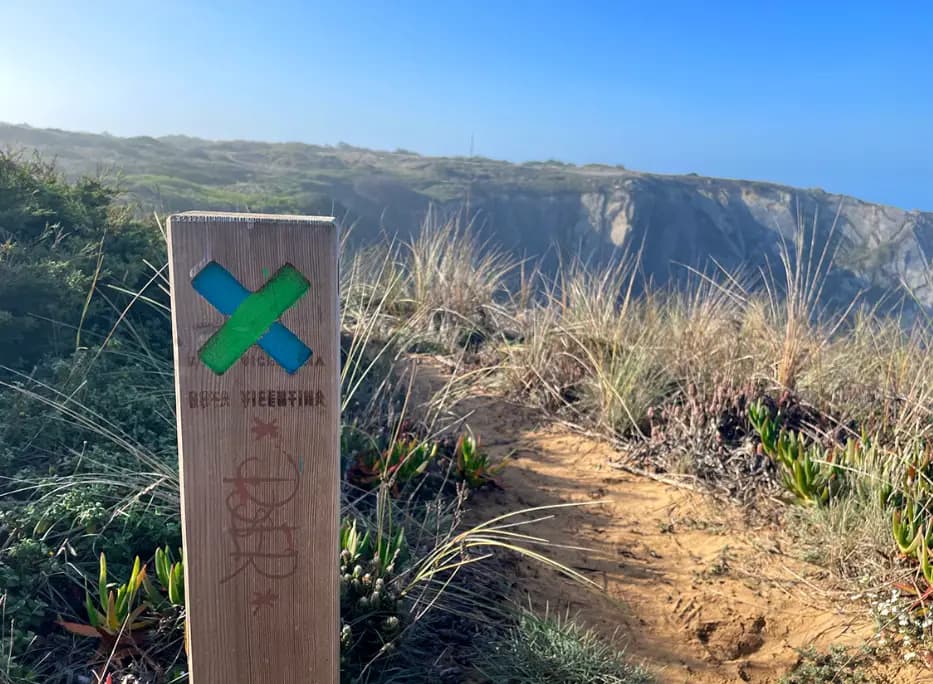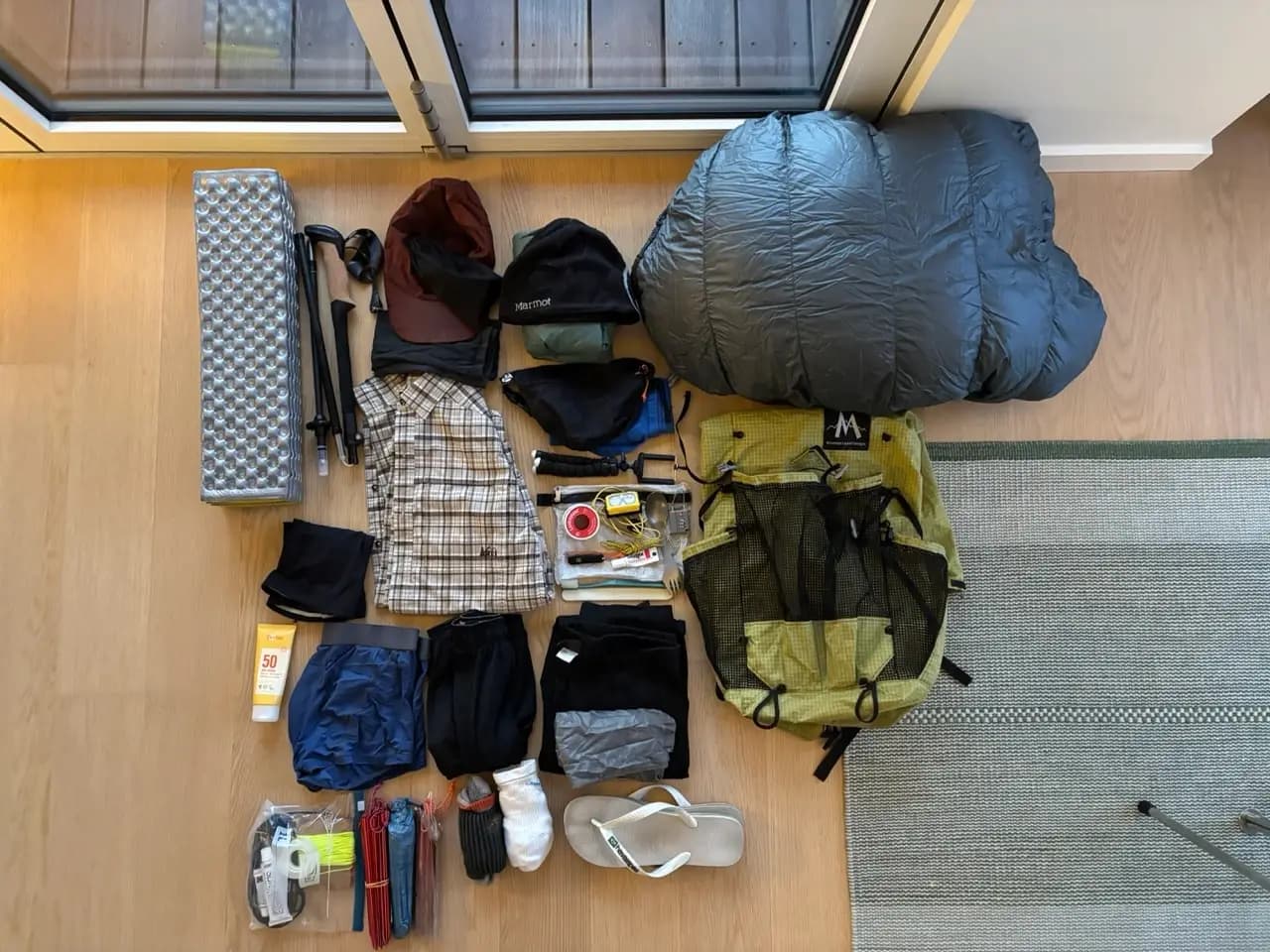
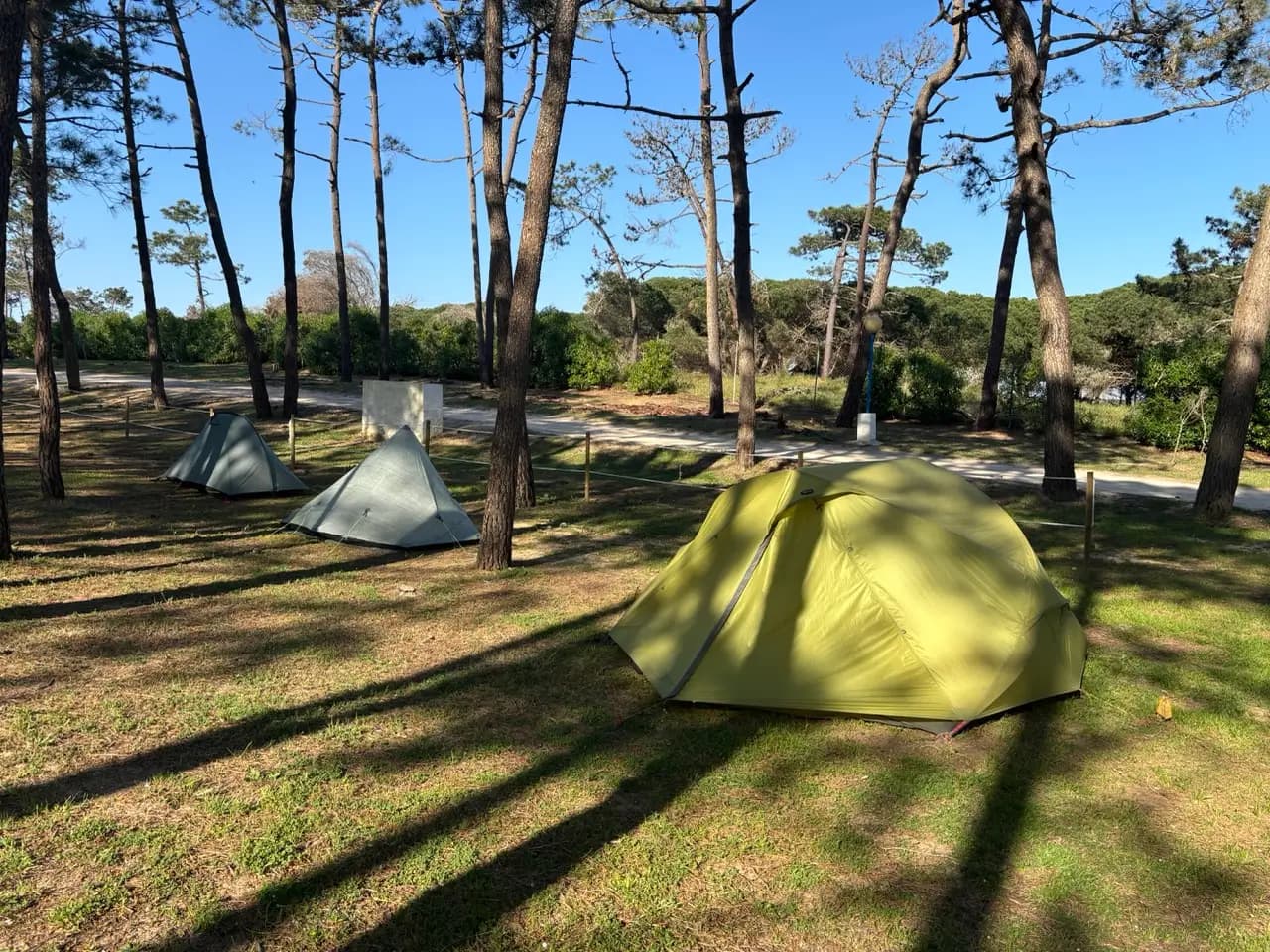
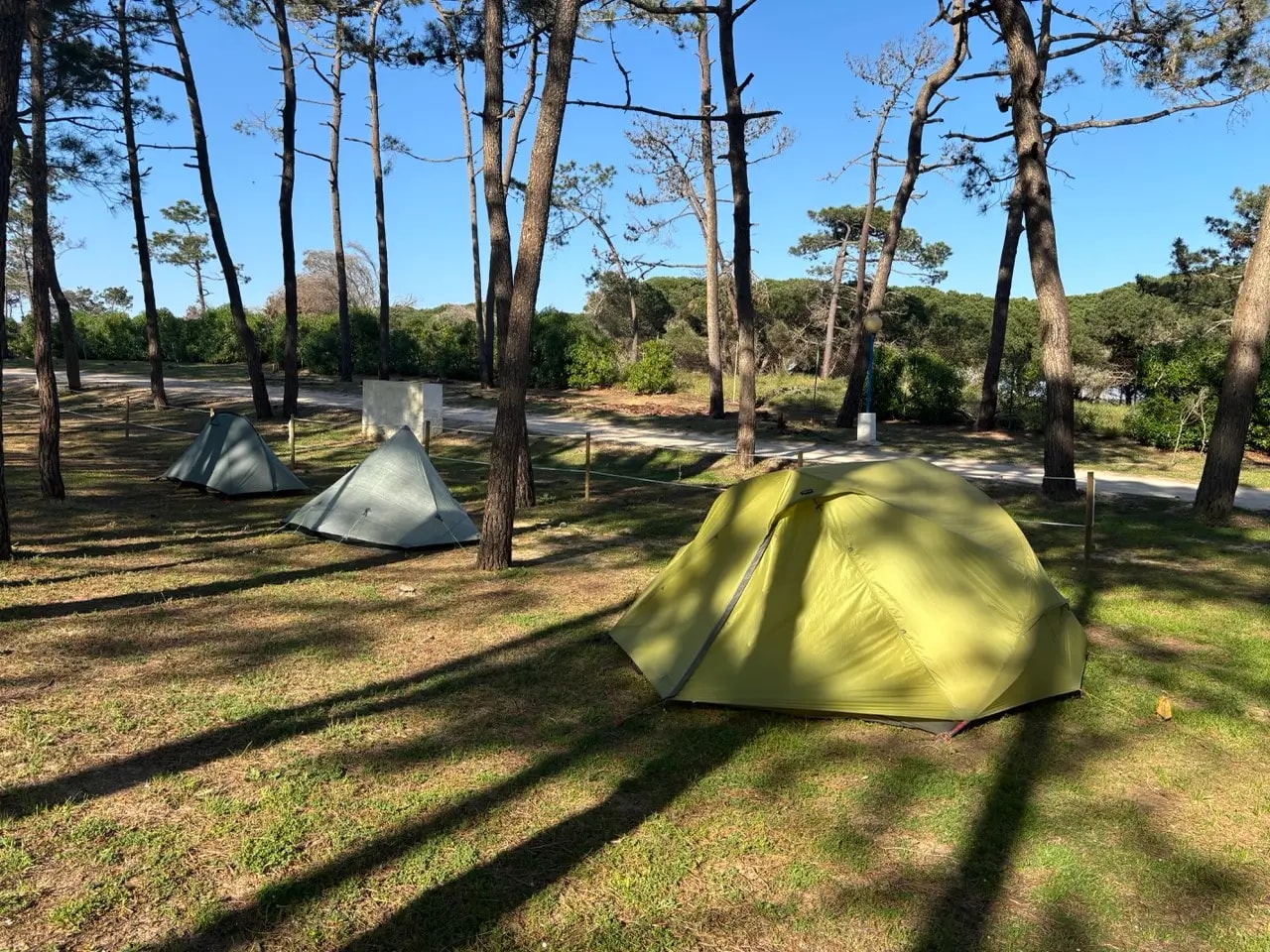
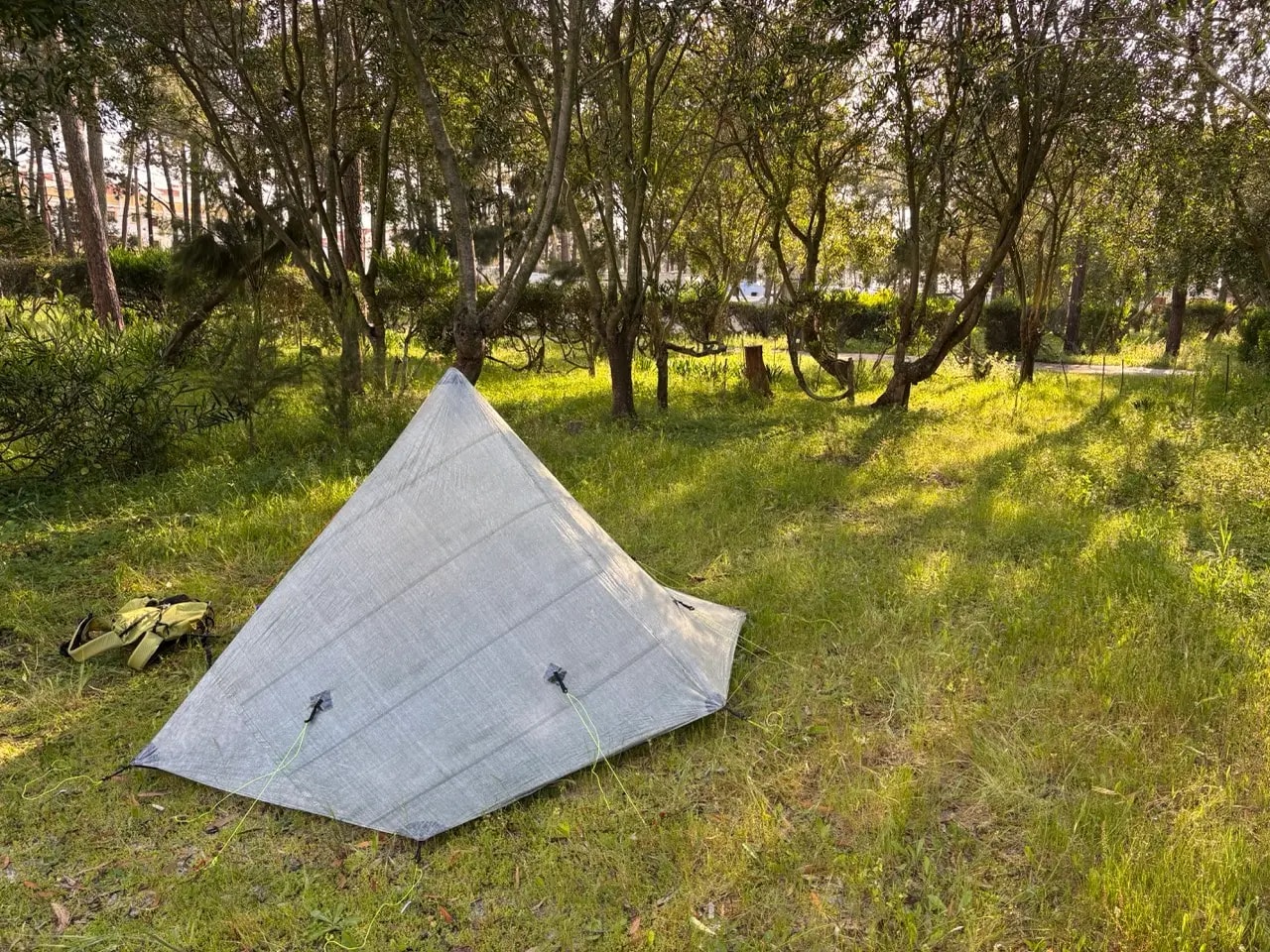
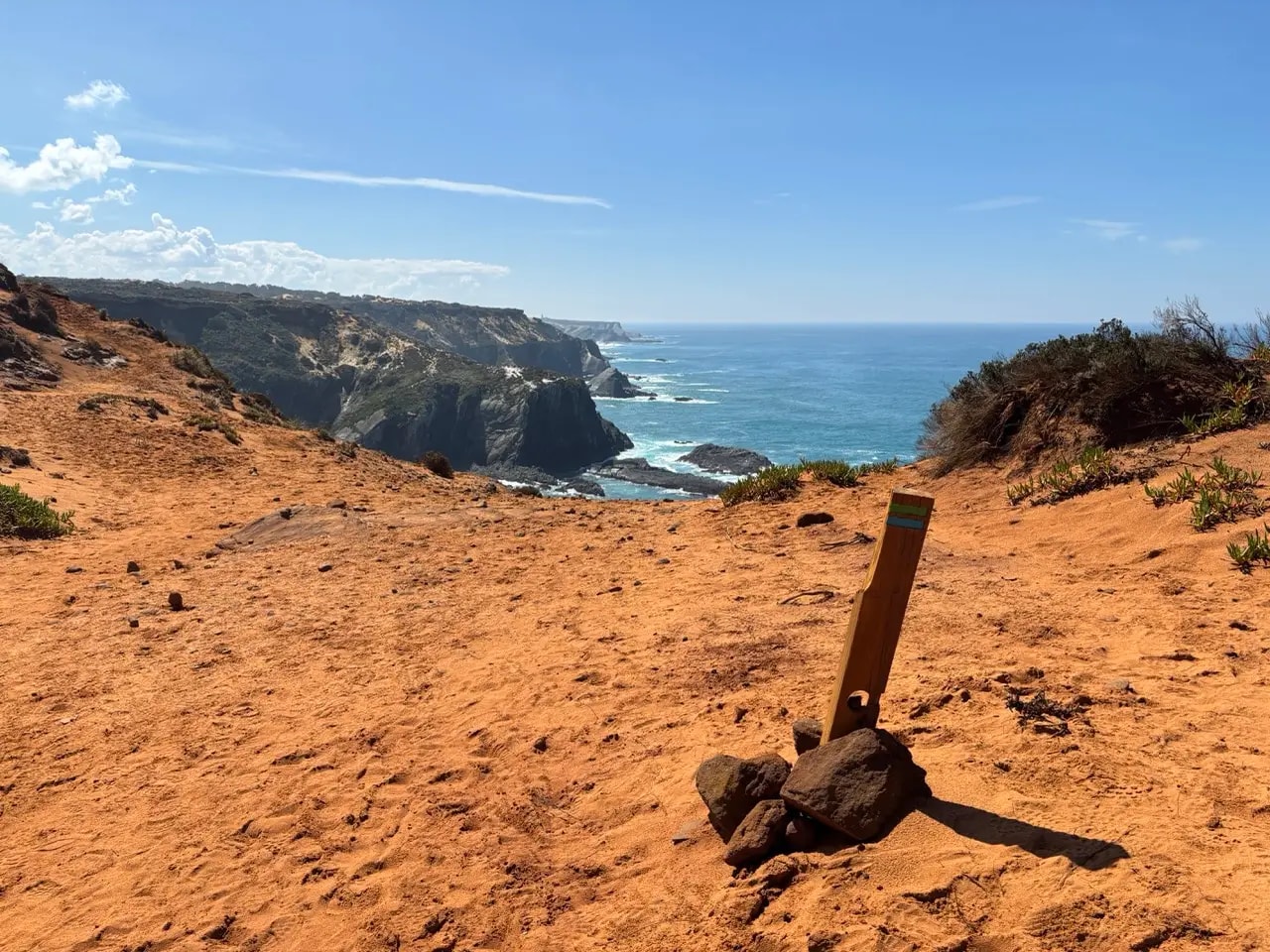
To make it clear - you can camp the on Fishermen's Trail, but you should not expect a European hut line or an official campsite every night. Most of the route is inside the Vicentine Coast Natural Park: wild camping is not legal there, official campgrounds are unevenly spaced, and the coast is exposed, windy, and short on natural water. This guide covers what that means in practice, where the real campsites are (north to south), how people camp responsibly, and what to pack. For hostels and guesthouses, see best places to stay; for a fast hike with campsite nights worked in, see 7 days on a budget.
Why carry a tent at all?
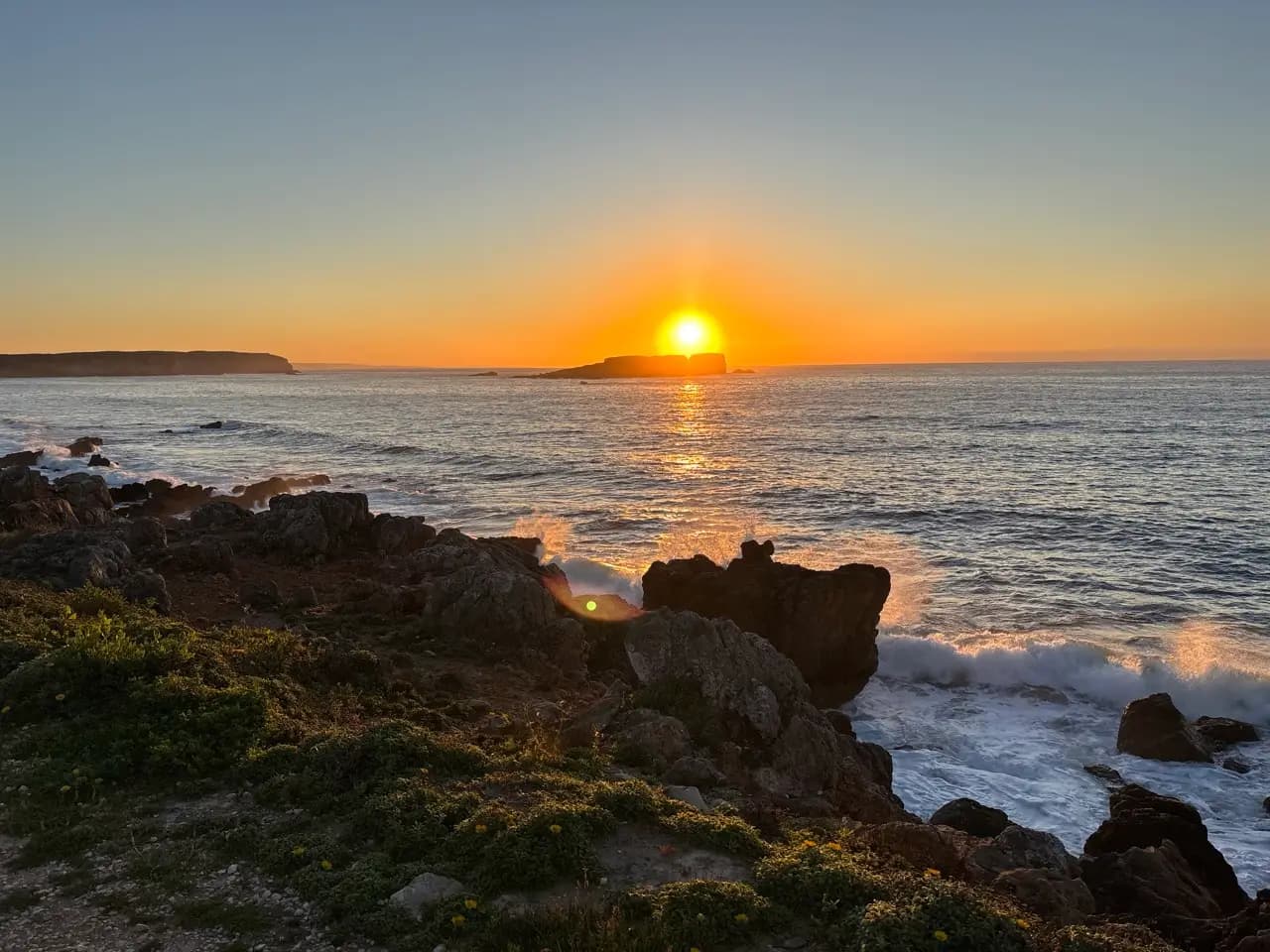
Freedom, flexibility and closeness to nature are the main wins of camping. You pick your day length without chasing check-in times, and you can keep nightly costs low - think on the order of €7-15 to pitch at many commercial sites versus €30-120+ for a bed in town, depending on season and room type. You are never truly remote on this trail (villages and roads are never far), but sleeping outside still puts you in the wild (and will set you up for the most fantastic sunrises and sunsets).
Official camping rules
Portuguese law does not treat wild camping as a free-for-all, and the Fishermen's Trail runs through protected coastal habitat. You will see no camping signage in sensitive spots; enforcement is stricter near busy beaches and towns than in more quiet inland. Hint: assume you need to behave like a guest - small footprint, no fire, no trace - even when you see other hikers doing the same.
The useful mental model: official sites when you can, discreet low-impact behaviour if you improvise, and no fires ever (dry, windy coast; serious wildfire risk). For the ethics checklist, the Leave No Trace seven principles are the standard - set up late, leave early, pack out toilet paper and food scraps, and stay off dunes and fragile vegetation.
Official campsites along (and near) the Fishermen's Trail
There are not campgrounds in every trail town. Gaps of 30-40 km between sites happen; some places are a few kilometres off the path. Always confirm prices and opening dates on the campsite's own site - figures below are rough low/high-season pointers from recent seasons (per person where sites price that way).
Porto Covo
-
Parque de Campismo Porto Covo
- central option; often cited around €6.50-9.50 depending on season.
- Parque de Campismo Costa do Vizir - second option in the area; roughly €6-11.
- Ilha do Pessegueiro Camping & Bungalows - about 4 km from town; check if that extra road walk fits your day.
Vila Nova de Milfontes
-
Camping Milfontes
- budget-friendly; published rates are often under €10 per pitch depending on season (I've paid around €10 on a summer pass-through - check current prices).
- Campiférias - another town option; often roughly €5-8 depending on season.
Zambujeira do Mar
-
Camping Villa Park Zambujeira
- short walk from town; many hikers rate it as one of the better setups on the route; often €8-12+ in high season.
Odeceixe
-
Camping e Bungalows S. Miguel
- near the river and trail access; roughly €8-14 band for pitches.
Aljezur
-
Camping Serrão
- inland side of the region; useful when you're on that leg; roughly €7-11.
Salema
-
Salema Eco Camp
- pricing varies by setup; book or message ahead.
Sagres
-
Orbitur Sagres
- large, well-used by hikers; expect €10-15 ballpark for a pitch depending on season.
- Orbitur also lists other Algarve locations if your itinerary shifts.
Stages around Almograve, Arrifana, Carrapateira, Vila do Bispo, and parts of Luz/Lagos may have no campground in the village itself. That's where you either walk to the next town with a site, book a bed, or make a careful wild-camping decision (see below). Use the Planner to line up stages and sleeps before you commit to extra long hiking days.
Wild camping on the Fishermen's Trail (the honest version)
Wild camping is not legal in the park, but many hikers still sleep outside discreetly. If you go this route, you accept the risk of being moved on or fined - especially near car parks, popular beaches, and signed zones.
It works best when:
- You need a flex night between booked stays or after a longer day than planned.
- You pick hidden ground: behind low scrub, out of sight from paths and roads - not on dunes, not on the open beach, not next to houses.
- You carry enough water. Streams are scarce on the coastal Fishermen's Trail; treat any stream you find as suspect (agriculture upstream). Dry camps - tenting nowhere near a tap - often mean 3-6 litres per person for dinner, breakfast, and the next morning's walk. That's heavier than it sounds; plan refill points in towns and cafés (most will refill a bottle; carry cash for a bottle purchase if refused).
When to avoid improvising:
- Bad weather. Rain and wind on the headlands are miserable in a tent; sand stakes pull out. A hostel night or a legal campsite beats a dangerous night on an exposed slope.
- High season weekends near surf towns - noise, torches, and crowds until late.
- Any spot with a no camping sign. Take the sign literally.
If in doubt, walk another 30 minutes - the right tucked-in spot often shows up once you get away from the obvious pitches.
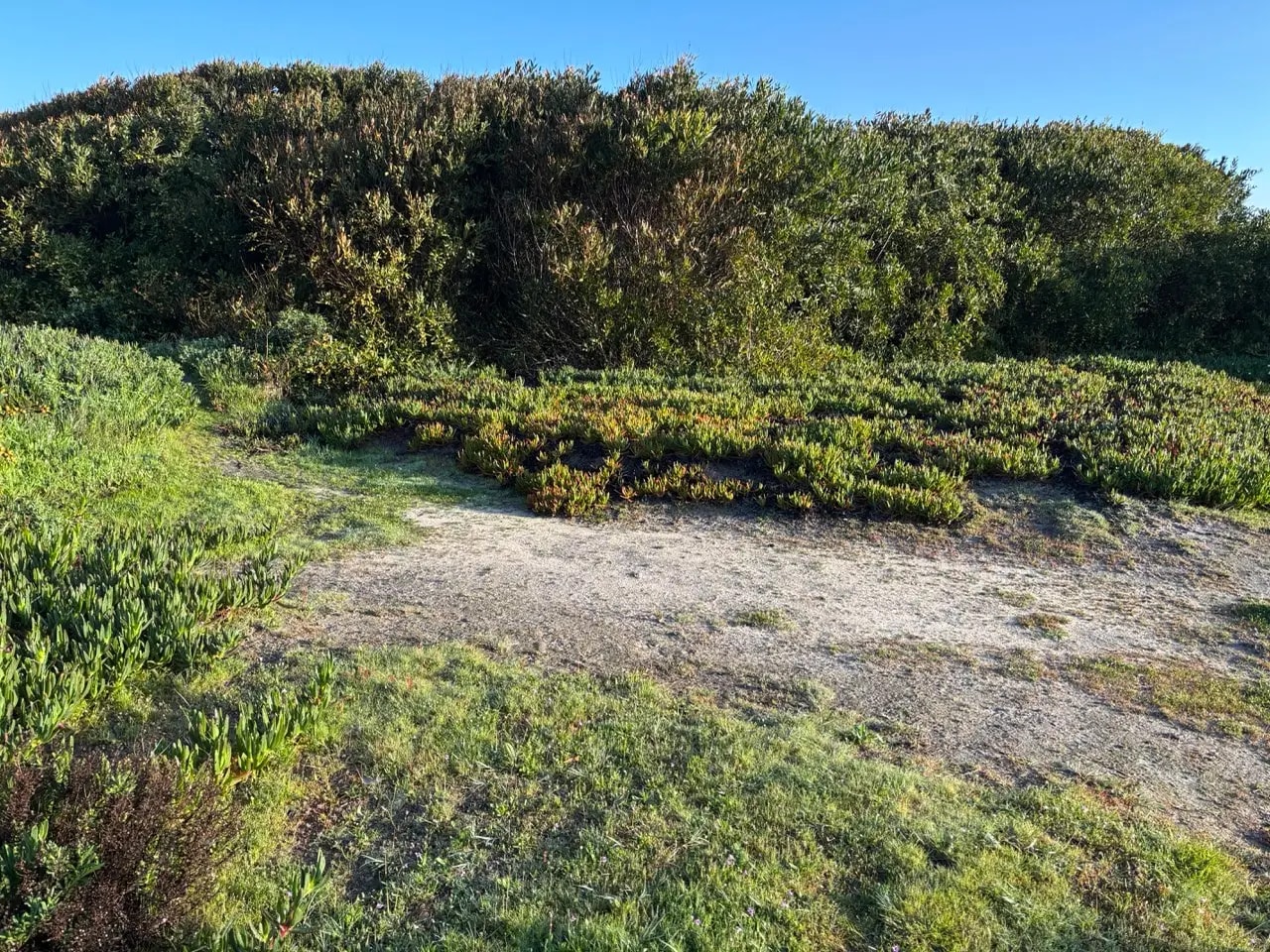
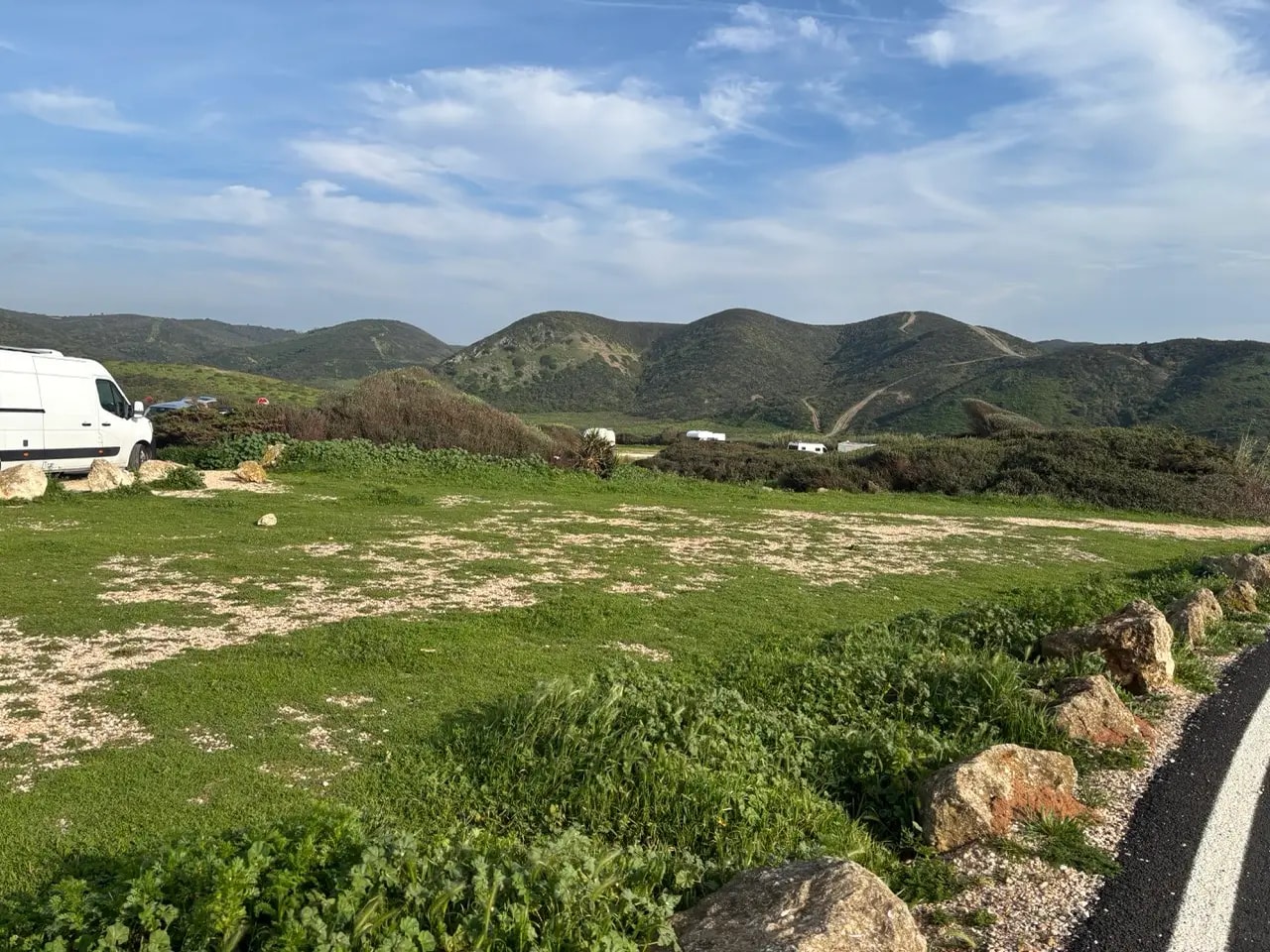
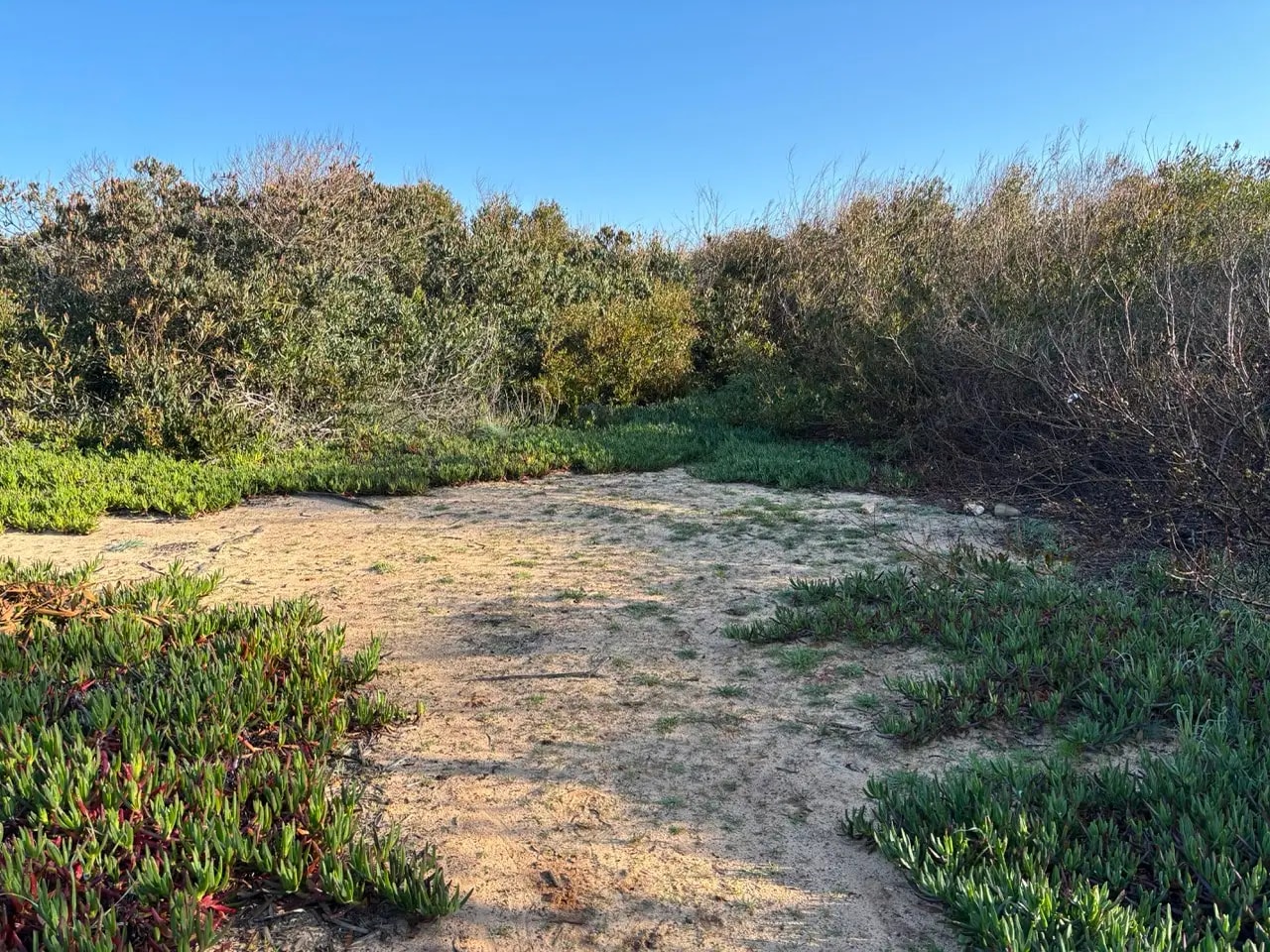
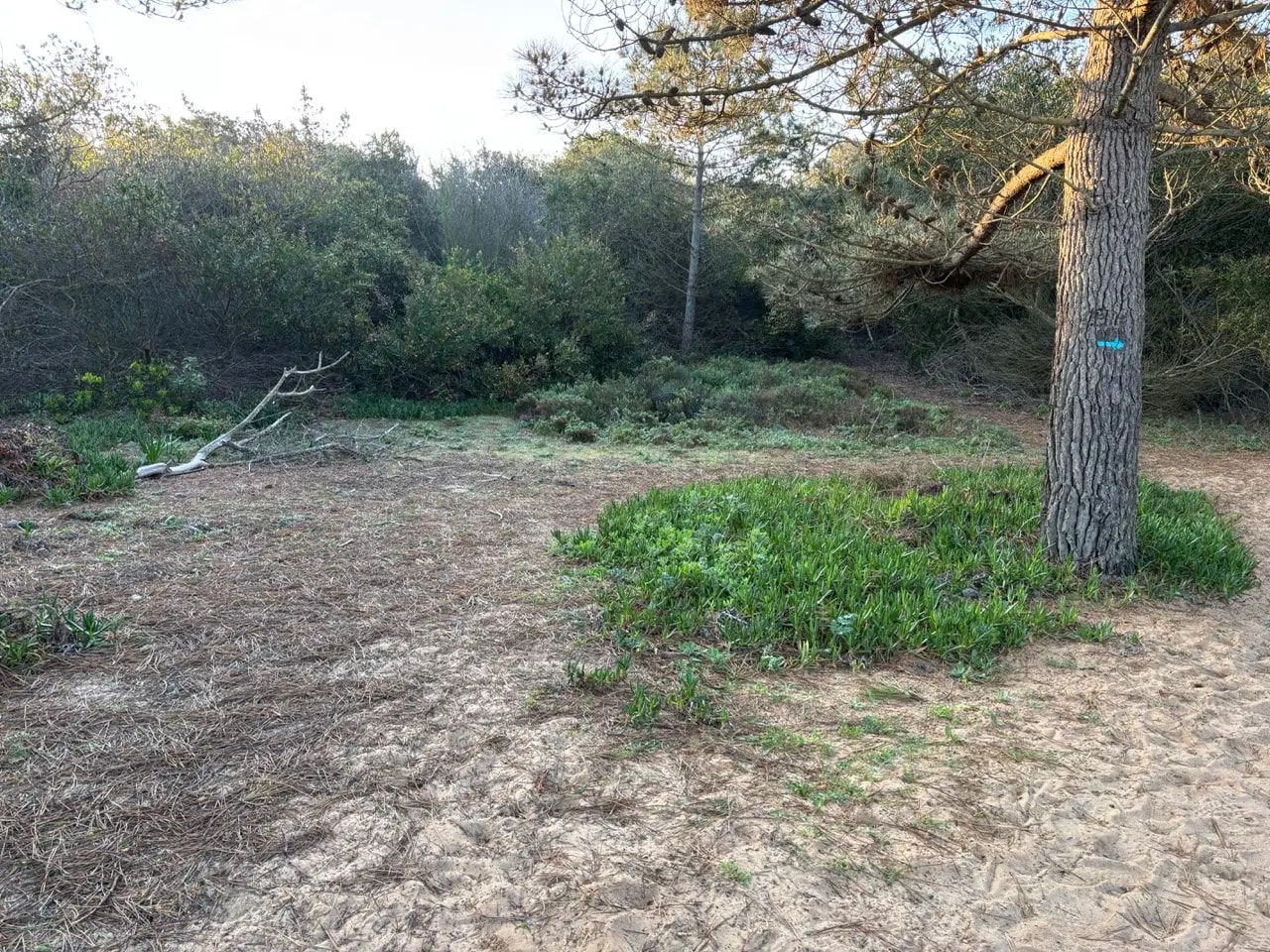
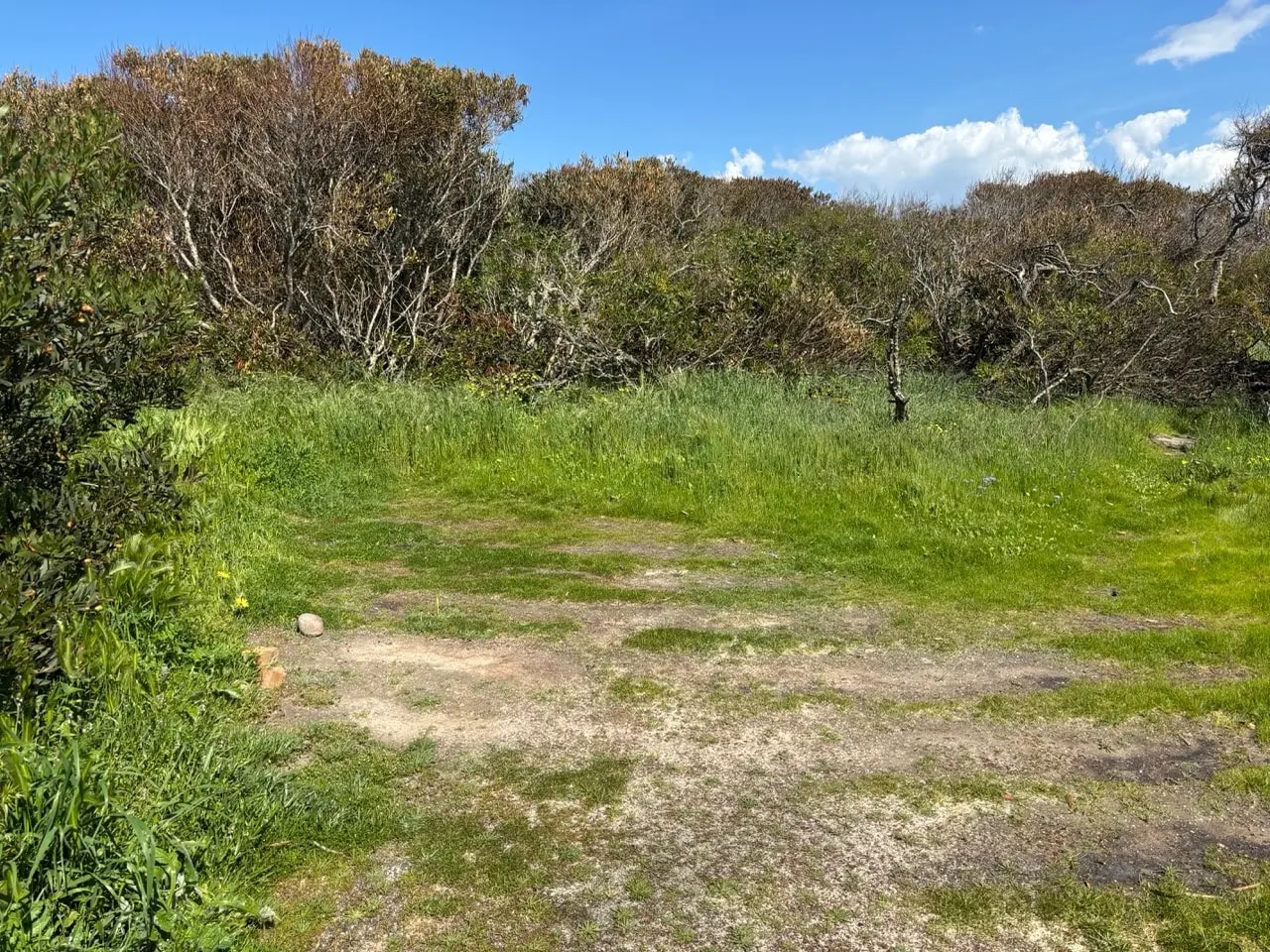
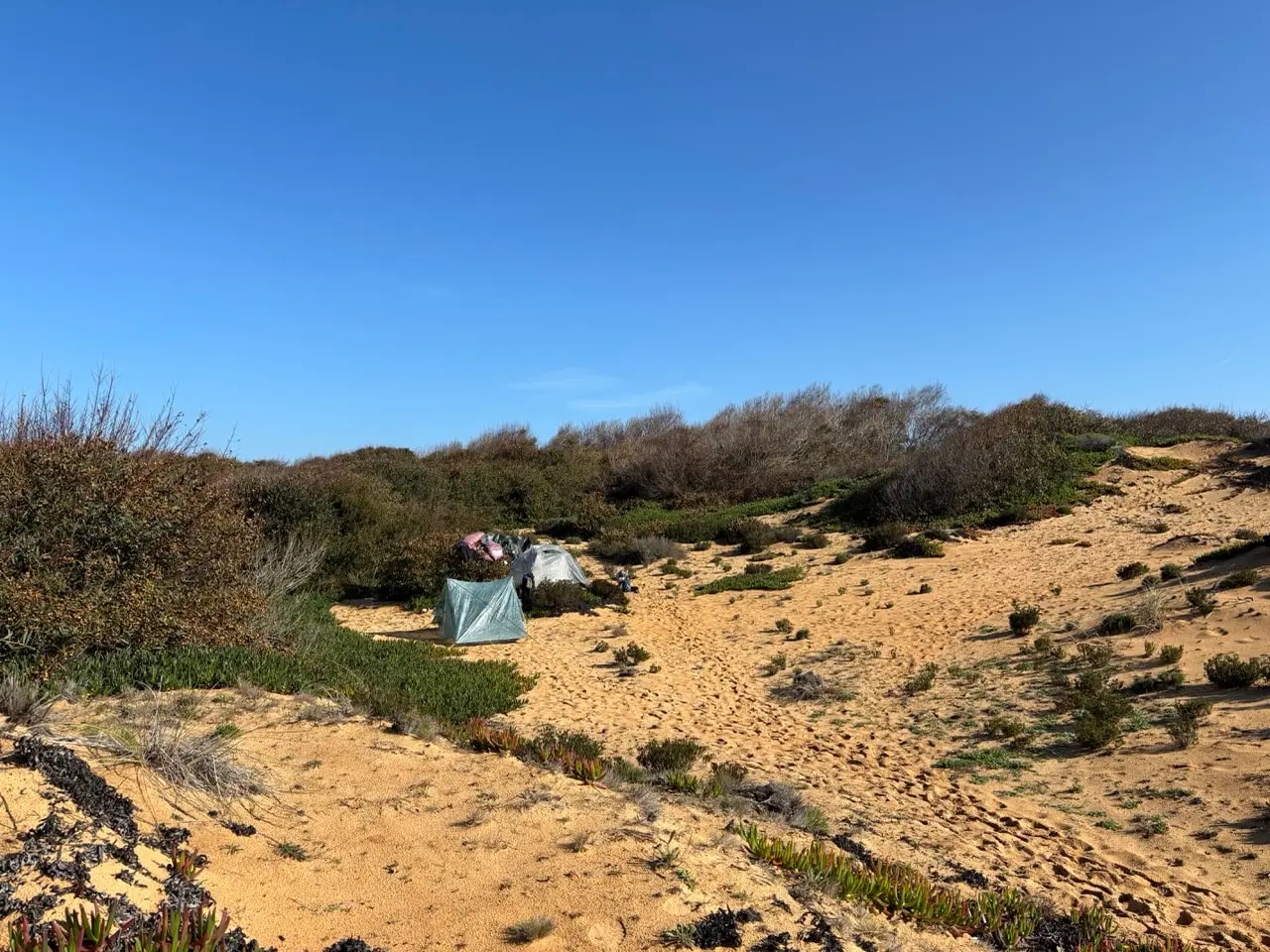
Wild camping is possible, but should be carried out with the greatest care and respect for the environment. It can add some richness to your experience and might even be necessary to make your itinerary work out. I advice you to plan ahead to the best of your ability, but don't be afraid to improvise if the situation calls for it. Happy trails!