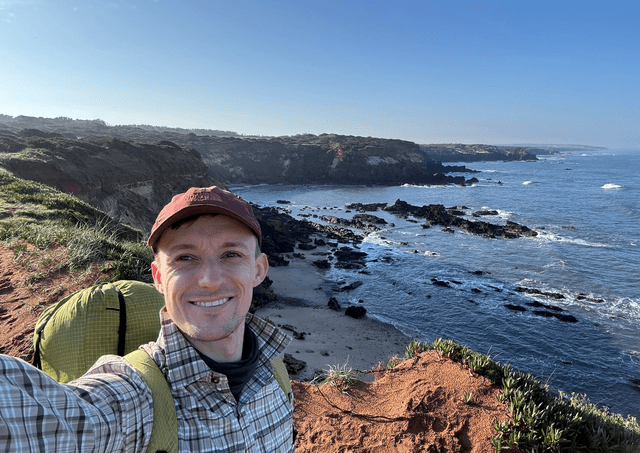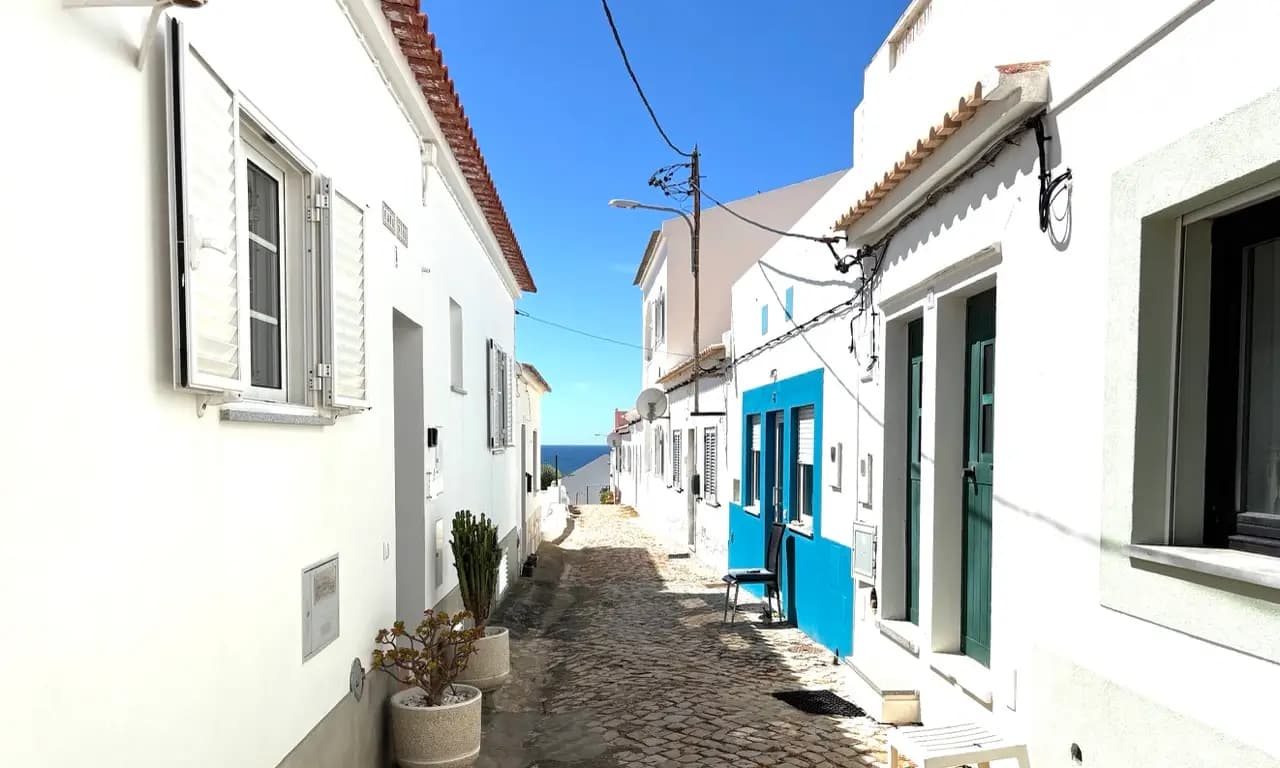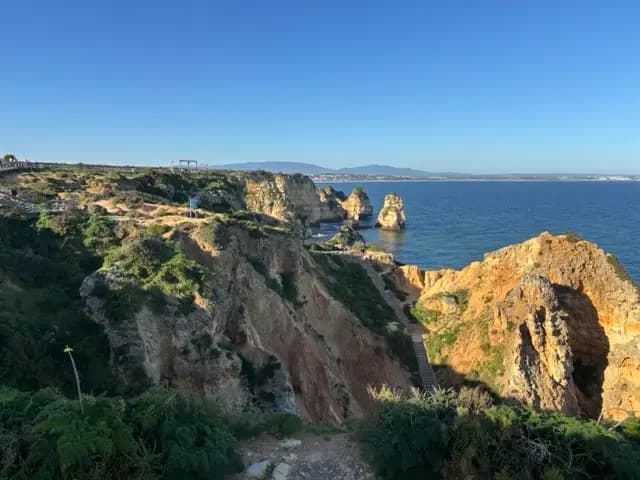
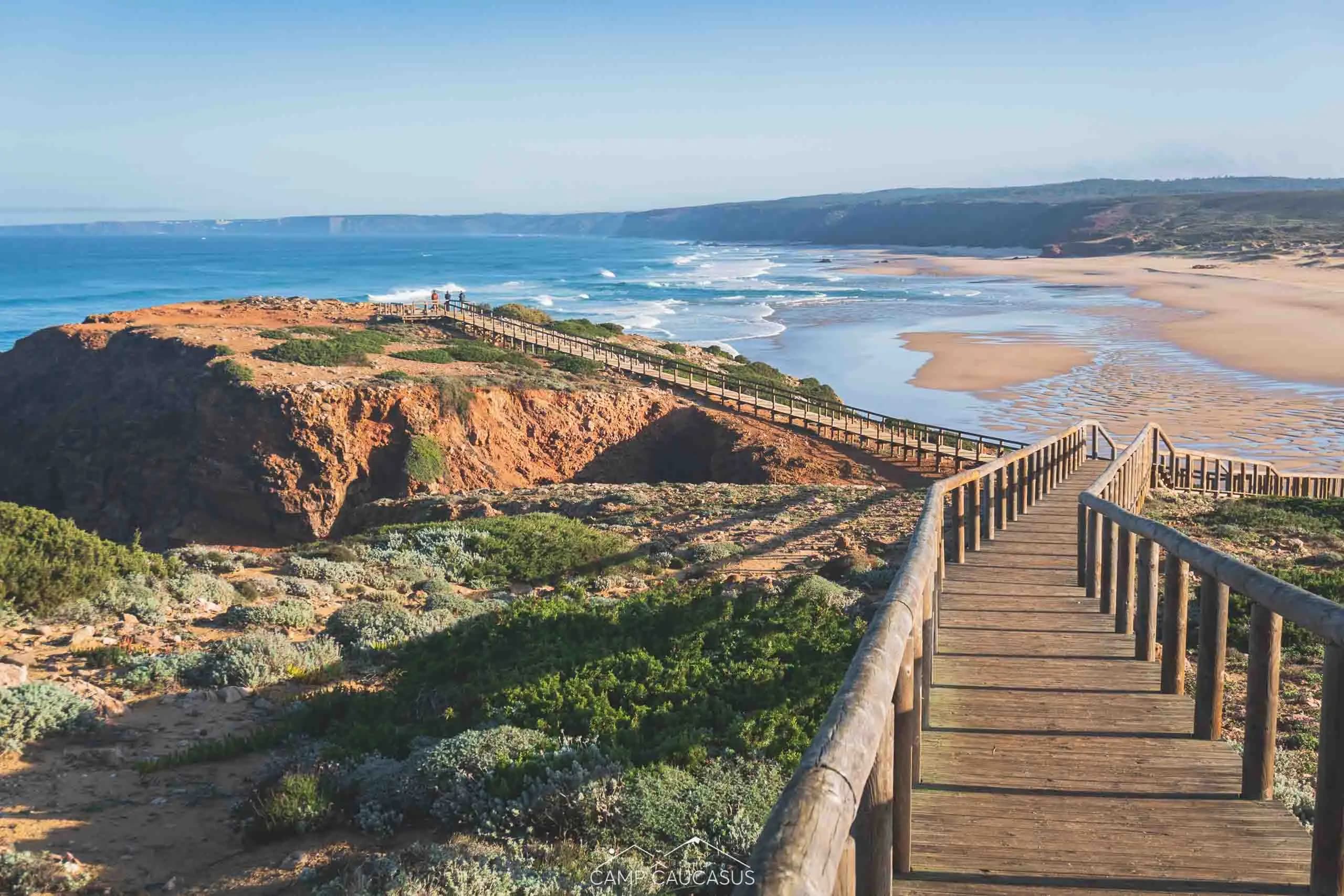
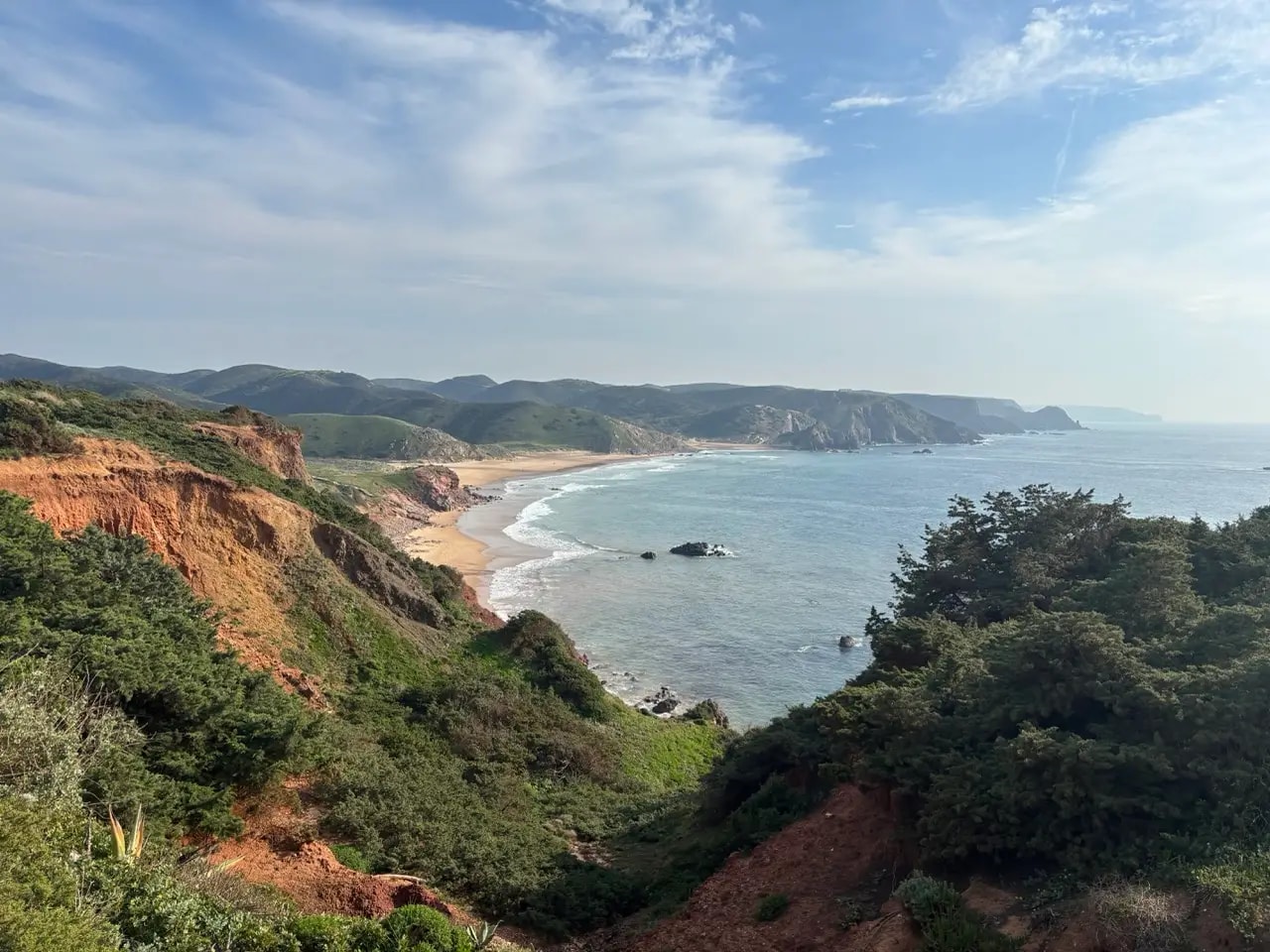
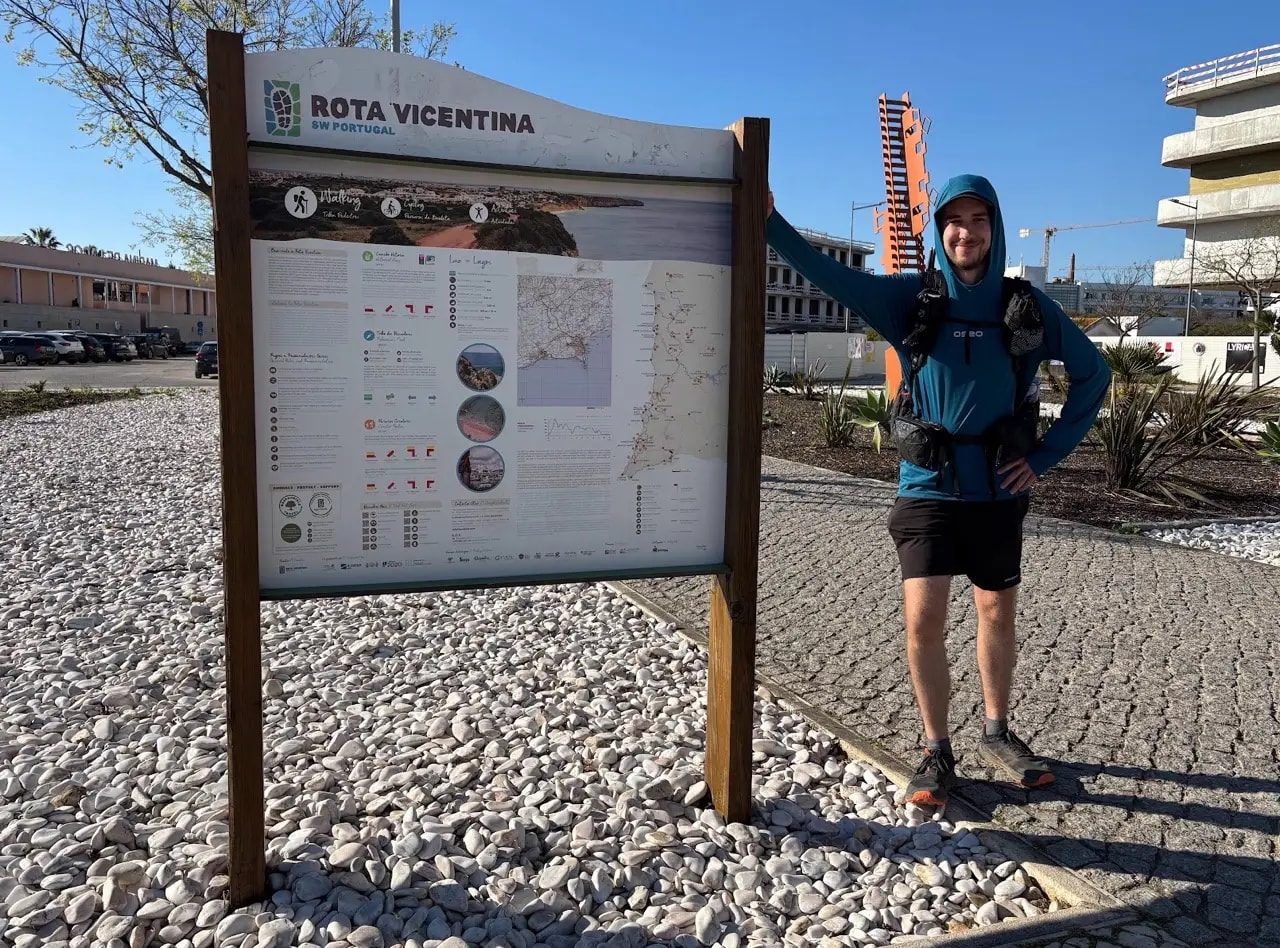
The Fisherman's Trail (Trilho dos Pescadores in Portuguese) is one of Europe's most beautiful long-distance hiking trails - it follows the Portuguese Rota Vicentina along the Atlantic coast for 226 km (140 miles) making it a perfect hike for both shorter day hikes and longer multi-day hikes. Expect cliffs, sandy beaches, and sleepy fishing villages. You are never truly remote, which also means that you can travel ultralight. If you are wondering why the route is showing up everywhere right now, I also wrote about why the Fishermen's Trail is getting so popular.
Fisherman's Trail in more detail
The Fisherman's Trail is part of the Rota Vicentina network, a long-distance path system in southwestern Portugal. It runs for roughly 226 km (140 miles) along the Atlantic coast, from the north near Porto Covo to Lagos in the south. Think of it as a point-to-point coastal hike that links the Alentejo and Algarve regions. The trail is not a mountain route; the terrain is mostly flat to rolling, with long sandy stretches and, in the Algarve section, rocky cliffs and short, steep climbs. Total elevation gain is only around 4,500 m along the full trail. Since it runs along the coast you will be quite exposed to the sun with little shade along the way making some of stages hot and feels more demanding than the stats suggest.
Where does the trail start and finish?
The trail officially starts at São Torpes, about 10 km north of Porto Covo, but most hikers use Porto Covo as their starting point since it has better accommodation options - however if you, like me, like to hike the full official distance, then start in São Torpes. When looking up São Torpes on Google Maps, you will see that there is not much town there. However, Sines nearby is a nice town with a lot of amenities and is a good place to start from - just a short bus ride (or hitchhike 🤘) away from the official start of the trail at São Torpes and then only 10 km to Porto Covo.
The trail finishes in Lagos, in the Algarve, where you get cobblestone streets, historic walls, and good transport links to Lisbon and Faro making it easy to wrap-up your travels. So in practice: start in Porto Covo (or São Torpes if you want the full official distance), finish in Lagos. Key towns along the way include Vila Nova de Milfontes, Almograve, Zambujeira do Mar, Odeceixe, Aljezur, Arrifana, Carrapateira, Vila do Bispo, Sagres, Salema, and Luz. The standard direction is north to south (Porto Covo to Lagos), which also makes getting to the trail and back at the end straightforward.
- São Torpes - Porto Covo (9.7 km)
- Porto Covo - Vila Nova de Milfontes (19.4 km)
- Vila Nova de Milfontes - Almograve (14.7 km)
- Almograve - Zambujeira do Mar (21.5 km)
- Zambujeira do Mar - Odeceixe (18.9 km)
- Odeceixe - Aljezur (22.6 km)
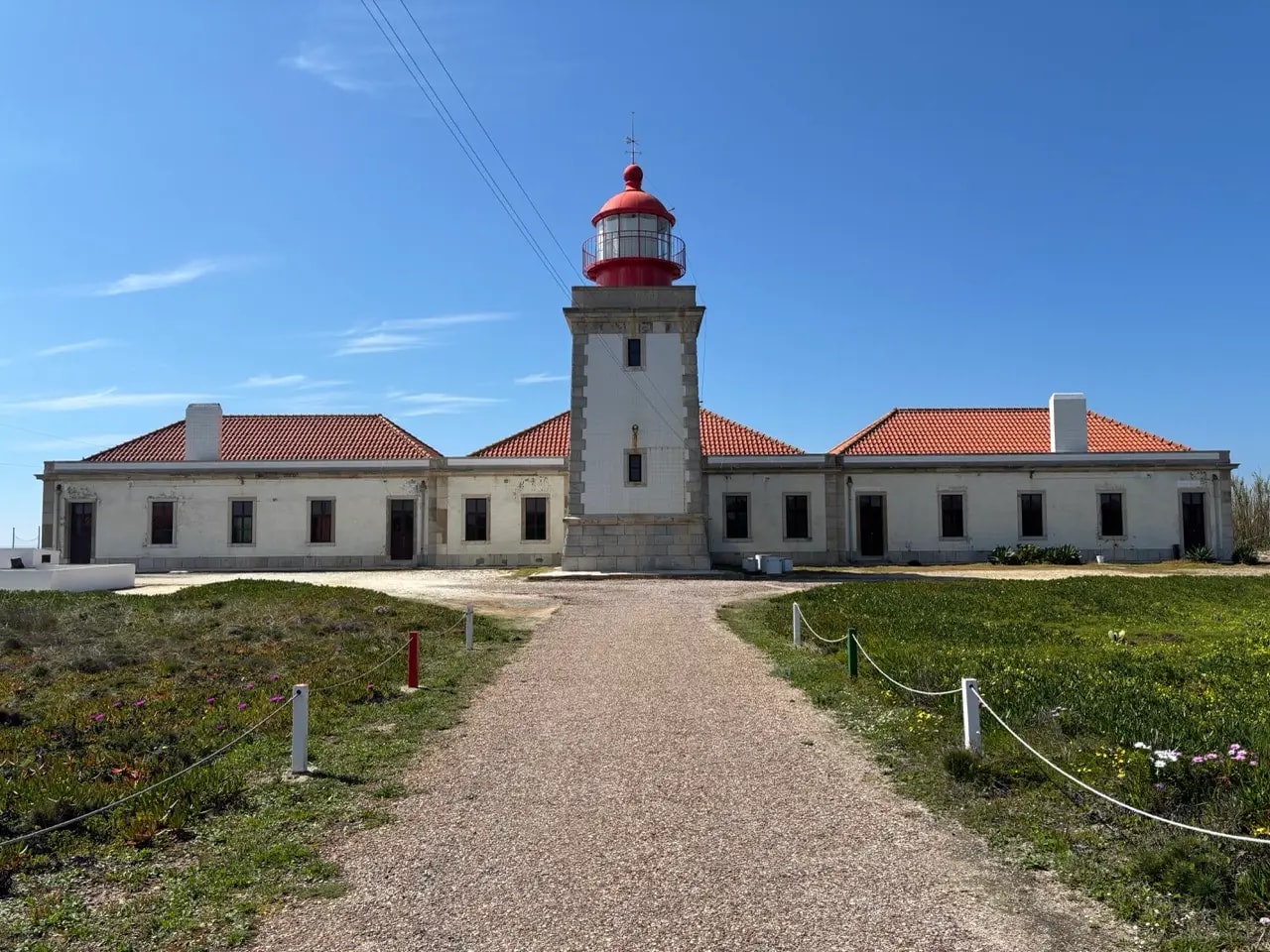
- Aljezur - Arrifana (17.1 km)
- Arrifana - Carrapateira (19.5 km)
- Carrapateira - Vila do Bispo (15.3 km)
- Vila do Bispo - Sagres (20.2 km mi)
- Sagres - Salema (19.5 km)
- Salema - Luz (11.5 km)
- Luz - Lagos (10.7 km)
How long does it take to hike?
Most people complete the Fisherman's Trail in 10-14 days, with 11-19 km per day as a typical range. The official hiking itinerary is split into 13 stages; each stage is between about 9 and 22 km, so you can follow the official hiking stages or combine them for longer days. If you're new to long-distance hiking, building in a rest day or two is a good idea - suggested towns for a rest day are Villa Nova de Milfontes or Sagres. There is also the possibily of bundling stages in completing the full trail in just 7 days.

Which direction should you hike?
The usual and recommended direction is north to south (Porto Covo to Lagos). The logistics are easier: buses run from Lisbon to Porto Covo, and from Lagos you can easily reach Lisbon or Faro. The wind often comes from the north, so walking south can feel more comfortable. There's no strong reason to walk south to north unless you have a specific constraint; for trail navigation and getting to the trail, north to south is the standard.
How to get to the trail
Getting to the trail is straightforward. Rede Expressos runs daily buses from Lisbon to Porto Covo; you can book online. If you fly into Lisbon, allow a day or half-day to reach Porto Covo (a short metro ride and about two hours by bus). At the finish point of Lagos has good public transport links - buses to Lisbon and to Faro (and Faro airport). The trail is point-to-point, so you'll need a shuttle, bus, or taxi at one end or the other; plan this when you do your hiking route planning. Given the excellent transport links I would not advice renting a car. Read here for more details on how to get to the trail.
Best time of year to hike
The best time to hike the Fisherman's Trail is spring (March-May) or autumn (September-November). In spring the landscape if more lush and green (before the sweeping summer hear hits). You can expect temperatures to be around 10-24 °C. In autumn, days are still warm, the sea breezes help, and there are fewer people. Summer is best avoided: it gets hot (often 29-35 °C) and there's, as mentioned, little shade along the coast. Additionally, if you avoid peak summer months you can also find cheaper flight tickets (hint: check Ryanair flights to Faro).
How difficult is the hike?
On paper the hike difficulty looks moderate: modest elevation and relatively short hiking distance per day. In practice it's a bit harder. About 60% of the trail is sand - dunes and beaches - which saps energy and makes each mile feel longer. The Algarve section adds short, steep climbs and descents on rocky cliffs. So trail conditions are easy to moderate overall: not technical, but sand and sun demand respect. Training for a long hike (regular walking, some sand or beach if you can) and hiking fitness preparation will make it more enjoyable. Trekking poles help on sand and on the rocky bits. If you're new to multi-day hikes, plan shorter days and consider Vicentina Transfers (the official luggage transfer service) so you can walk with a light pack - it makes a big difference.
Can you hike it in sections?
Yes. The trail is well suited to day hikes or shorter multi-day sections. The official hiking stages (see list below) make it easy to pick a stretch. Two especially rewarding day hike options, if you're based in Lagos, are Salema to Luz and Luz to Lagos - both short, scenic, and easy to do without a full thru-hike. You can also do a few consecutive stages (e.g. 3-5 days) and use buses or taxis to get to and from the trail. So whether you want a full hiking itinerary or just a taste, the trail is flexible.
Is the trail easy to follow?
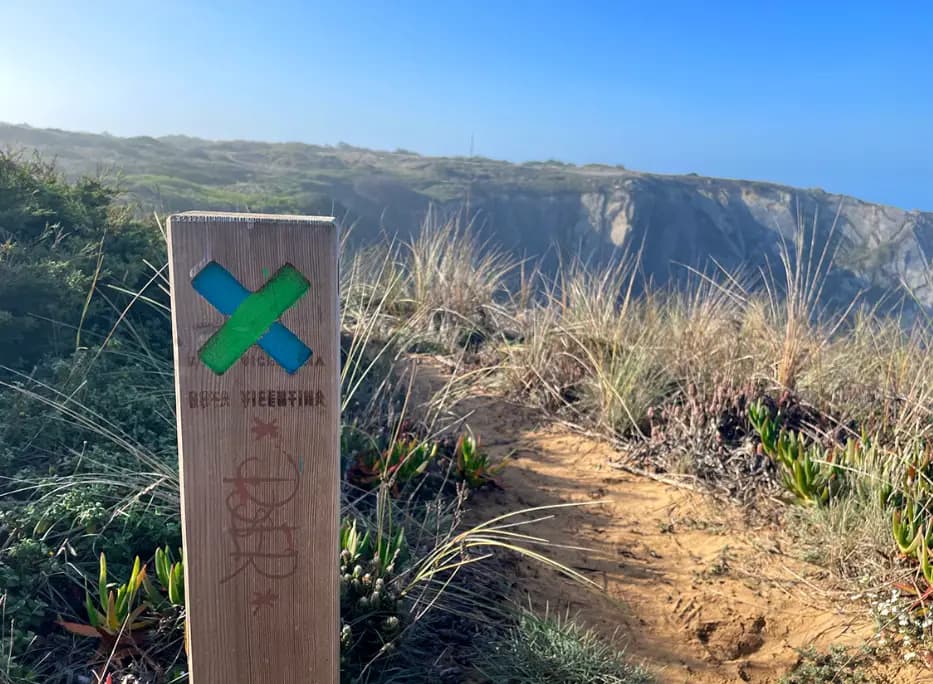
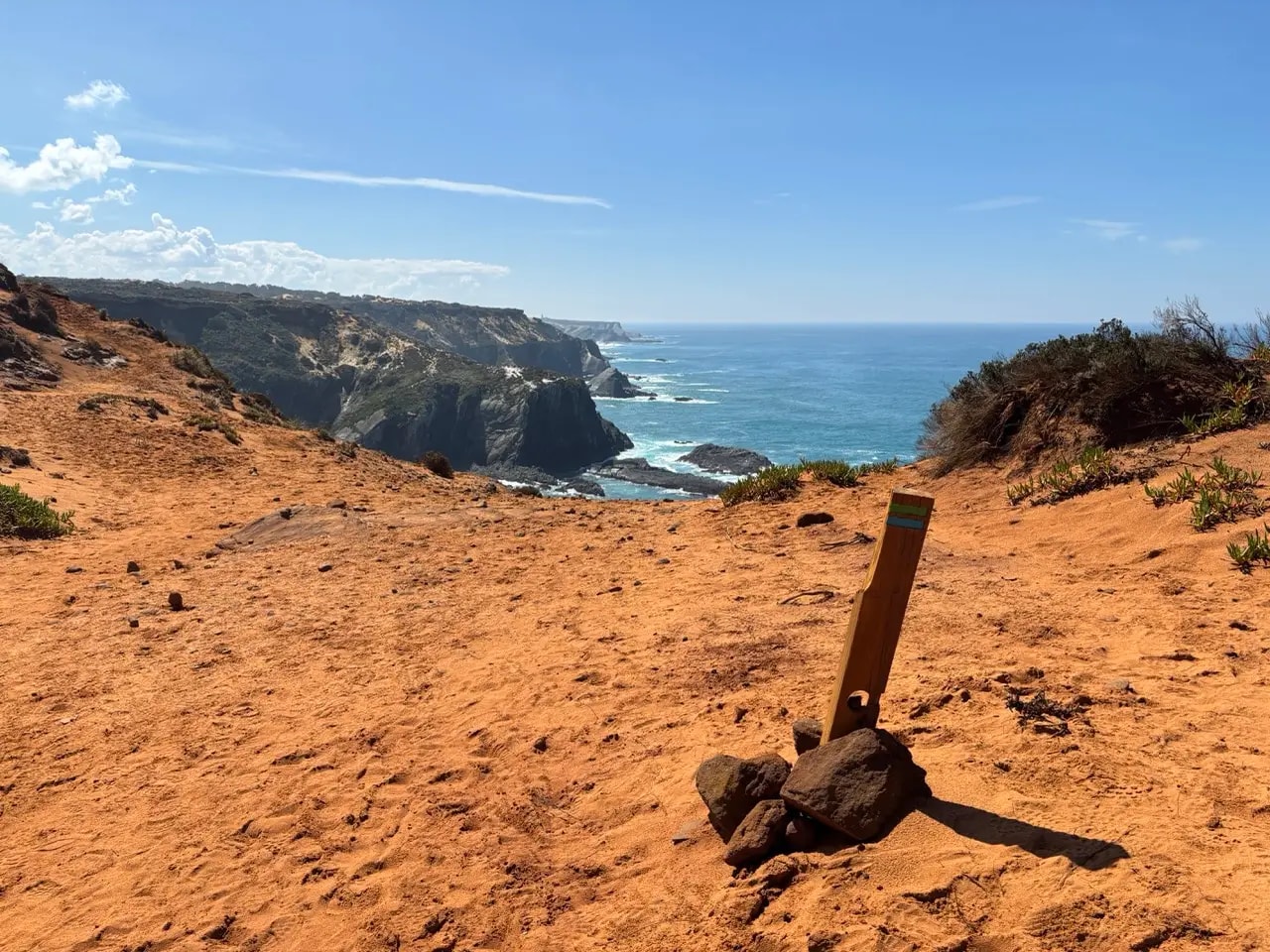
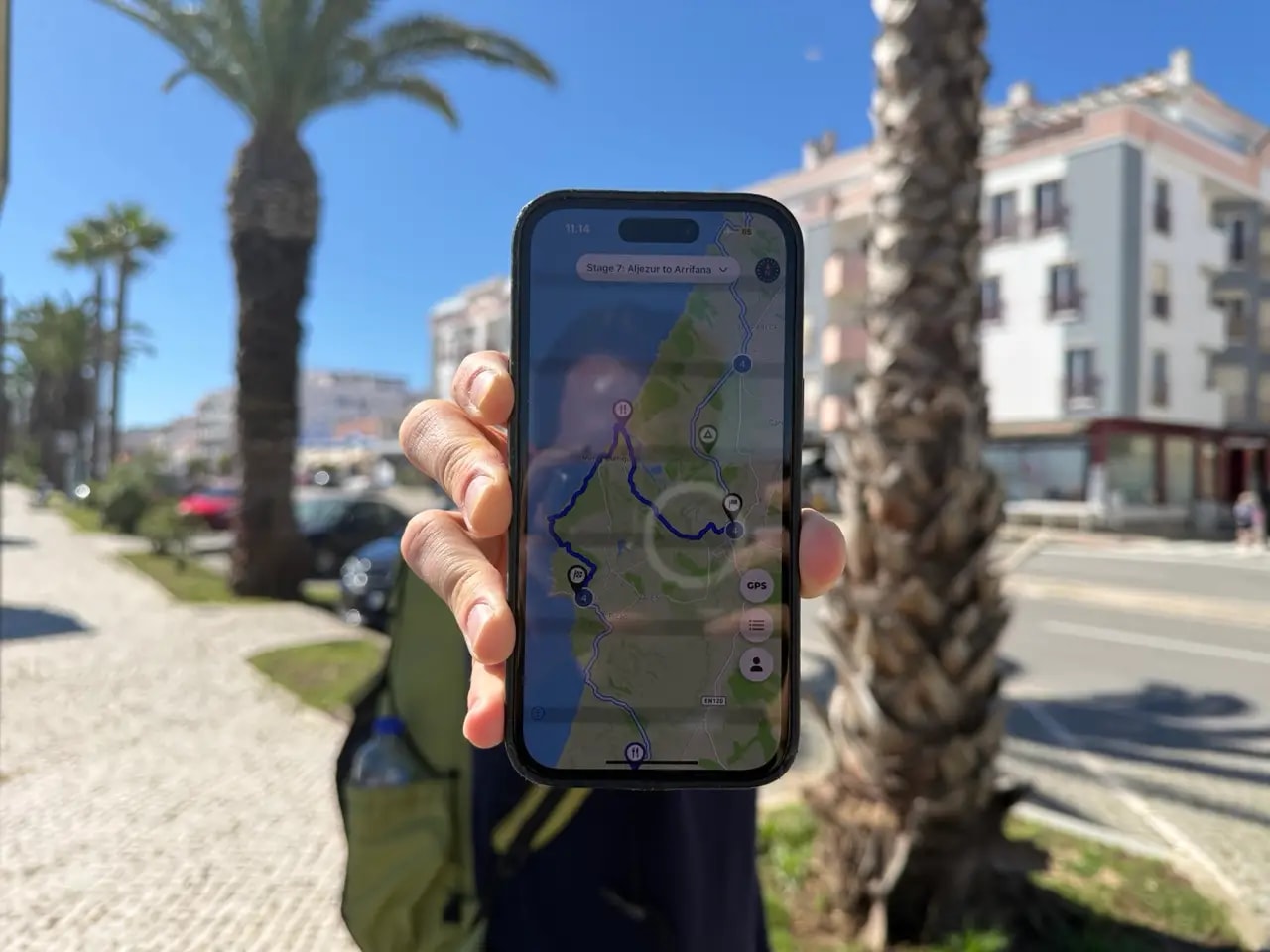
Yes! The trail is generally well-marked with blue and green stripes on posts, rocks, and walls. The Rota Vicentina website has GPX files for downloading. Having a map at hand is always a good idea - we can't wrap up this section without suggestion our app Fishermen's Trail - it's a free and you can use offline to navigate the trail. Give it a try and let us know what you think! 🙏 We've also written a short piece on how to navigate on the Fishermen's Trail.
Where to stay along the trail
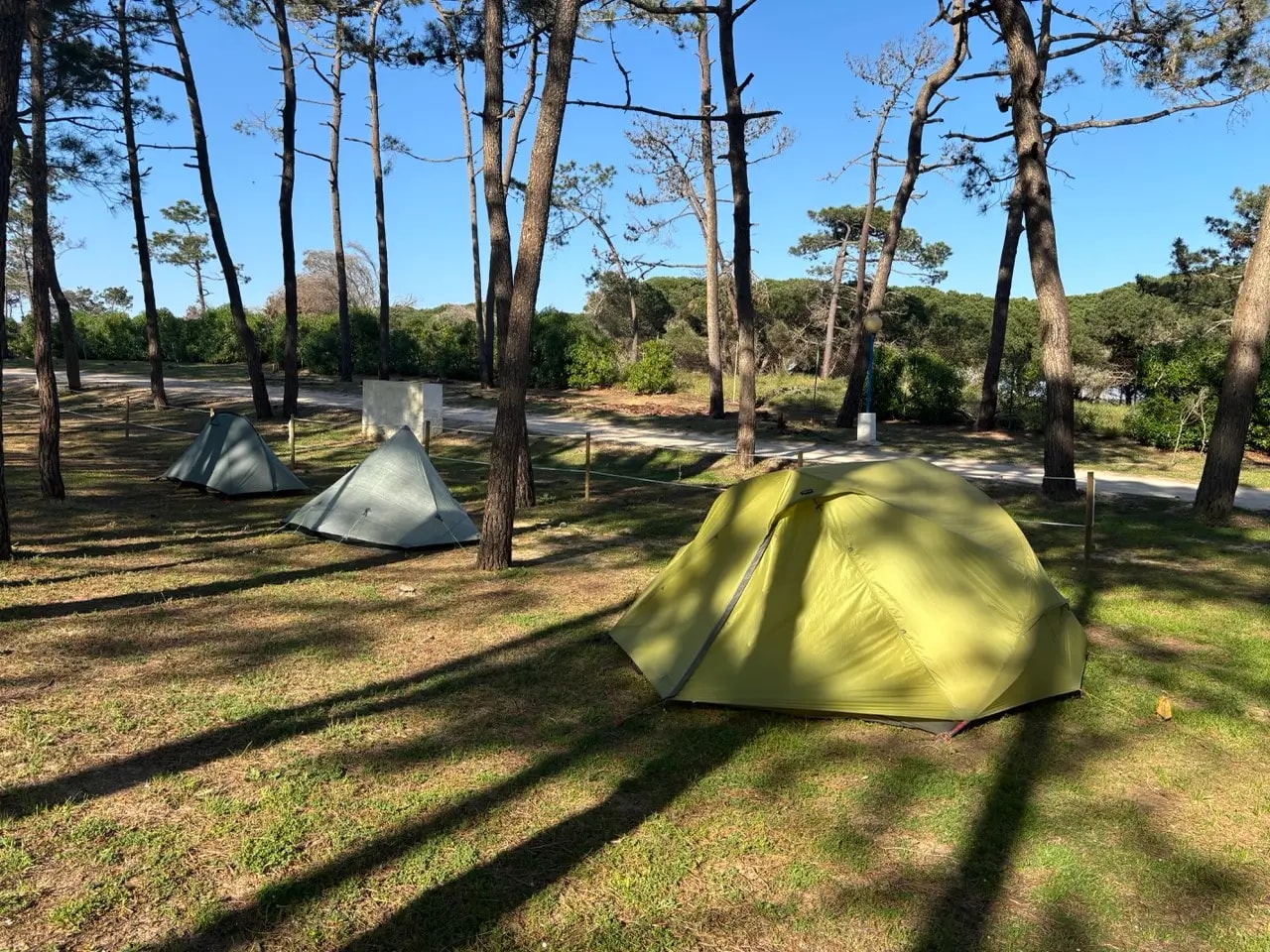
Wild camping is not allowed along the Fisherman's Trail since the area is protected. For official campsites, water carry, gear, and how hikers handle tents in practice, read the ultimate guide to camping. Accommodation along the trail is in guesthouses, hostels and B&Bs - you can tailor your trip to your liking and budget. Places to stay on the hike range from about €30 (bunkbed hostel style) to €120+ (hotel or apartment style) per night; many include a small breakfast (sandwich, pastry and coffee). Accommodation can be limited in some villages, so I'd recommend booking ahead, especially in spring and autumn - the best spots fill up early. Staying as close to the trail as possible cuts down extra walking at the end of the day (thank me later!). I've written a guide on the best places to stay, so check it out for a head start.
Food and drink options
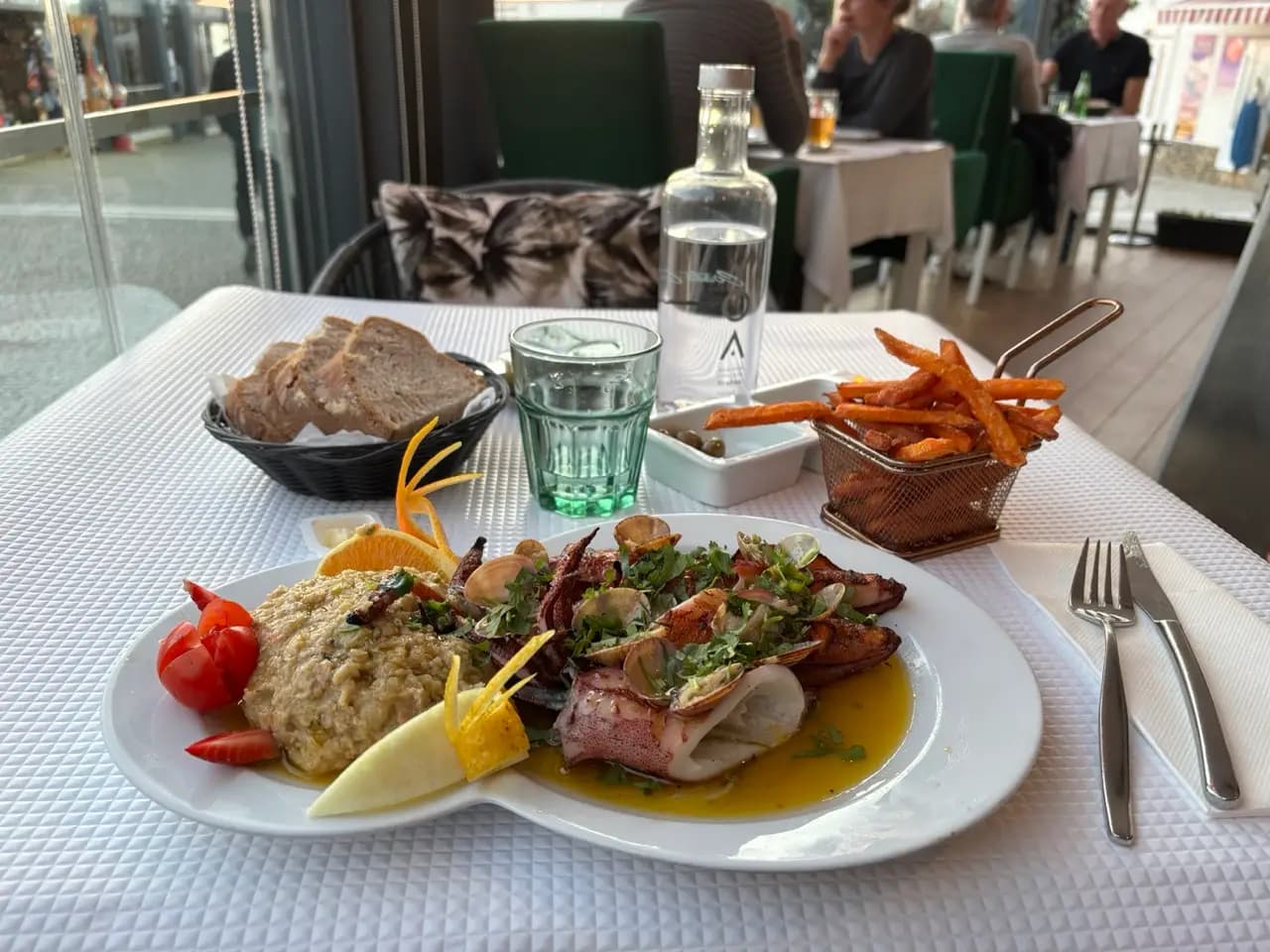
Let's be honest - a big motivator for hiking the world is to enjoy the local cuisine. Fishermen's Trail is no exception and you can expect lots of wholesome Portuguese dishes along the way. For what to order, what repeats on every menu, and how cafés and pastelarias work in practice, read food on the Fishermen's Trail. A few honourable mentions:
- Peixe do dia - fish/catch of the day fresh off the grill with some lemon and olive oil
- Pastel de nata - a delicious custard tart that is highly addictive and somehow is the perfect coffee companion
- Cataplana - a traditional Portuguese seafood stew with a variety of fish and shellfish
You don't need long resupply carries. Villages have cafés, bakeries, and small groceries; larger resupply options are in Vila Nova de Milfontes, Sagres, Vila do Bispo, and Lagos. A typical day: coffee and a pastel de nata in the morning, bread and cheese from a bakery for lunch, then a restaurant dinner - grilled fish, seafood cataplana, or other local dishes - with a glass of vinho verde. Restaurants and pubs (or the Portuguese equivalent) are part of the experience; say yes to dinner in town. Regarding water, carry 1-2 litres, refill in towns; cafés and restaurants often refill bottles. In summer or on long days, 2-3 litres is safer.
What gear to bring
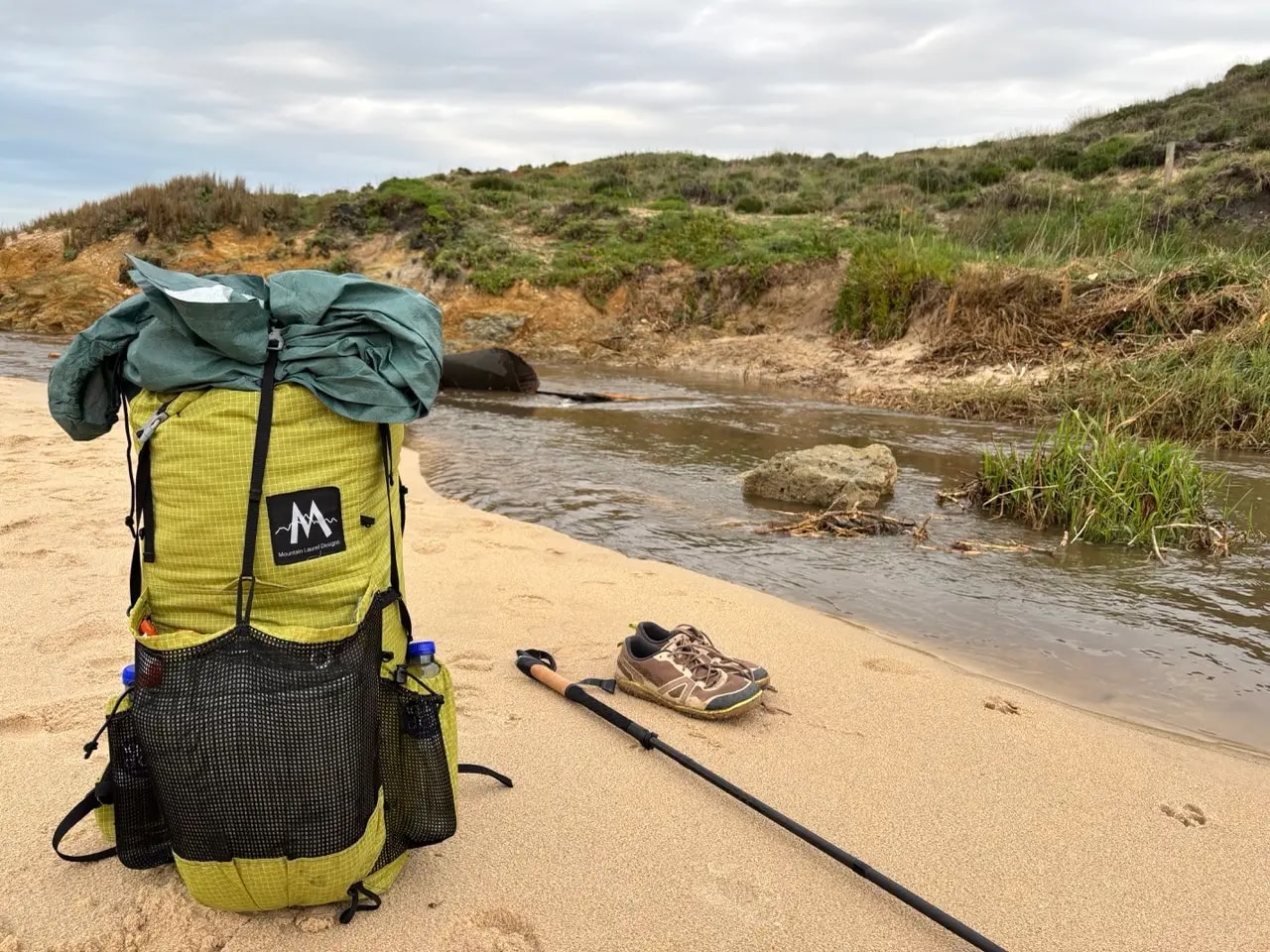
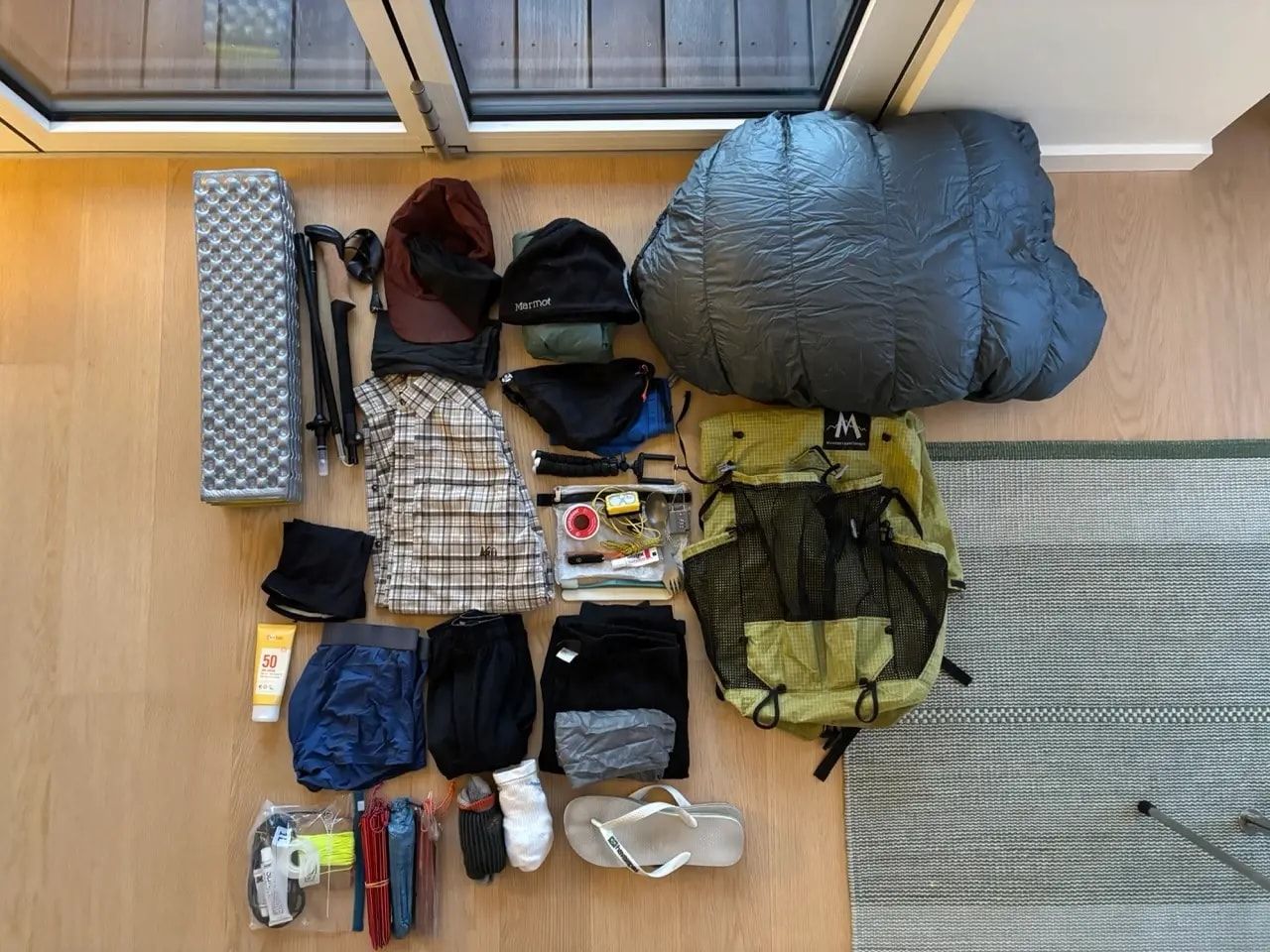
Pack light. You don't need camping gear or heavy boots. A hiking packing list for the Fisherman's Trail should focus on comfort and sun. Trail runners are better than hiking boots - lighter and easier in sand. Bring full sun protection: hat, sunglasses, sunscreen, and a long-sleeve sun shirt. A light waterproof rain jacket (or poncho) is useful in spring, autumn, or winter. Trekking poles are worth it for sand and rocky descents - check out out list of 5 must-pack items. Blister prevention (good socks, well-trodden hiking shoes) matters. A daypack or small multi-day pack (e.g. 20-30 L) is enough. For a full breakdown of what to bring - footwear, clothing, water, camping gear and more - read the packing guide for the Fishermen's Trail.
Luggage transfer services
Vicentina Transfers is the official luggage transfer service for the Rota Vicentina. They move your main bag between accommodation each day so you can walk with a light pack. Using a luggage transfer service turns the Fisherman's Trail into a true luxury multi-day hike and is especially helpful if you're not used to carrying a full pack or just want an extre degree of comfort.
What to do after completing the hike
Once you finish in Lagos, you've got a real town to explore - restaurants, beaches, and history. From Lagos you can reach Lisbon or Faro by bus for flights or trains. If you want more walking, the Rota Vicentina also includes the Historical Way (marked with red and yellow), which runs inland and can be combined with the Fisherman's Trail for a longer trip.
Key takeaways
- Bring sun protection - hat, sunglasses, sunscreen, and a long-sleeve sun shirt
- Book accommodation in advance
- Bring trail runners for hiking
- Download the Fishermen's Trail App for offline navigation
- Try to experience as much of the local cuisine as possible