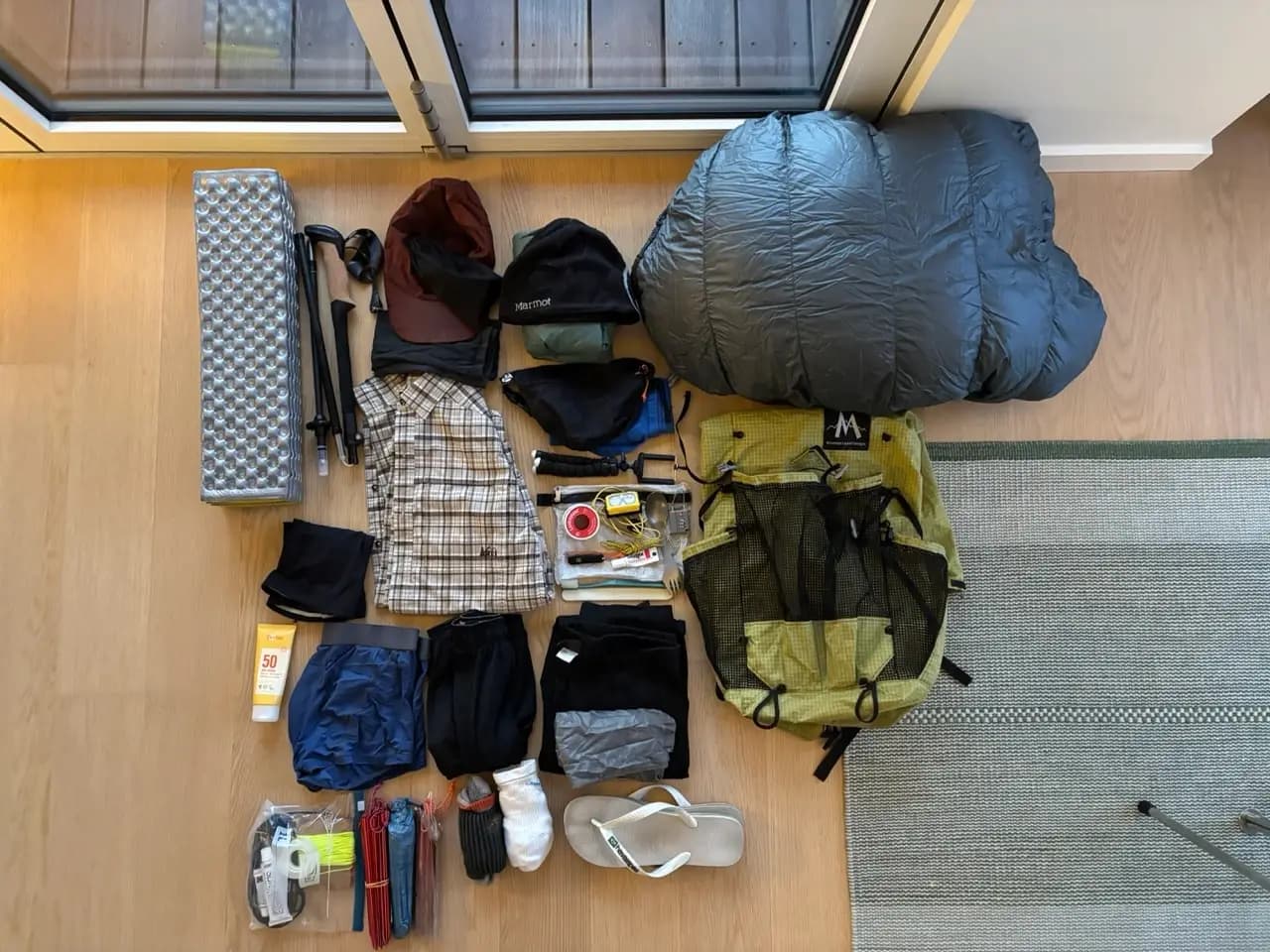
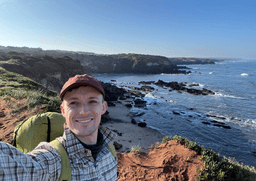
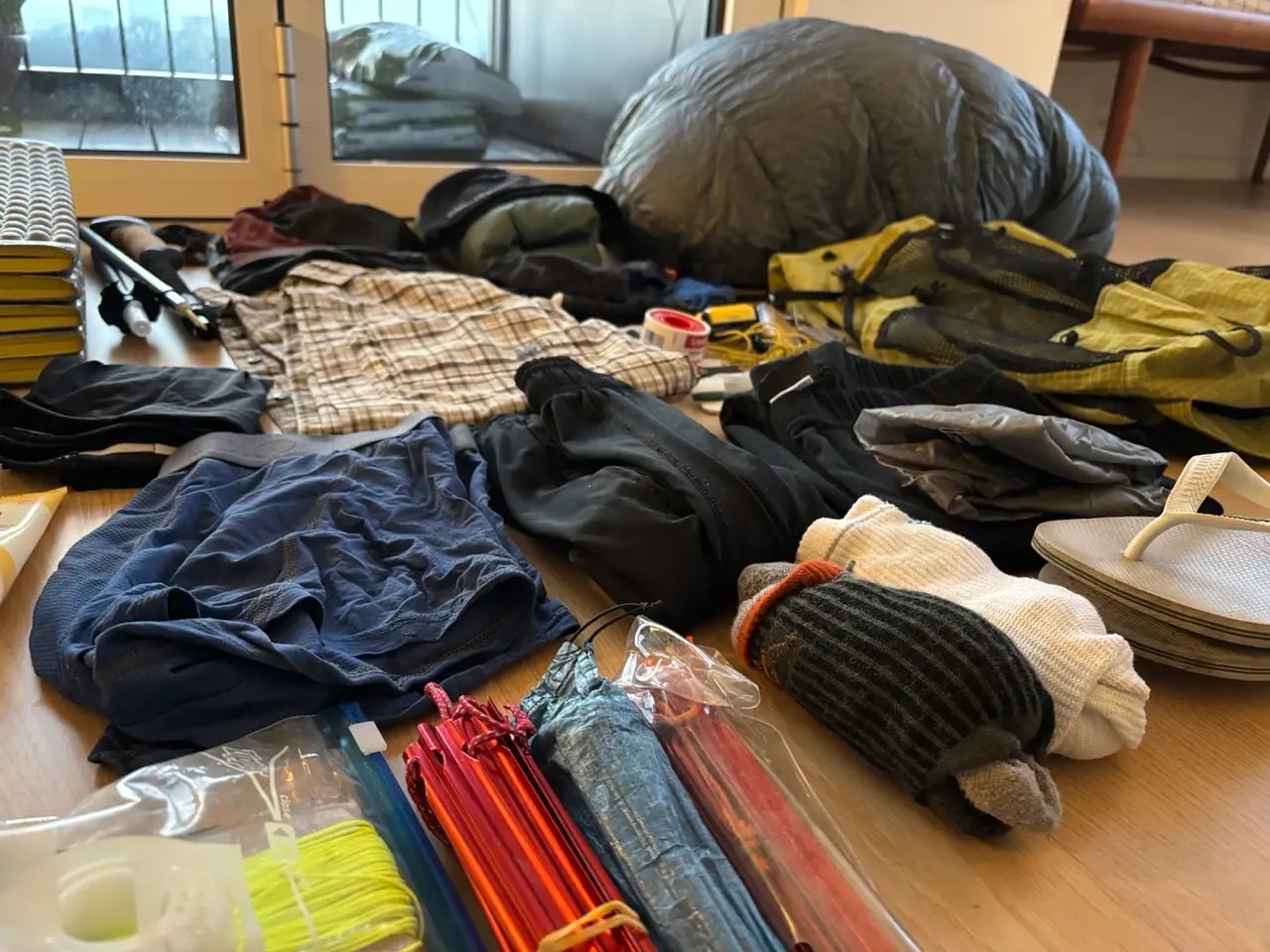
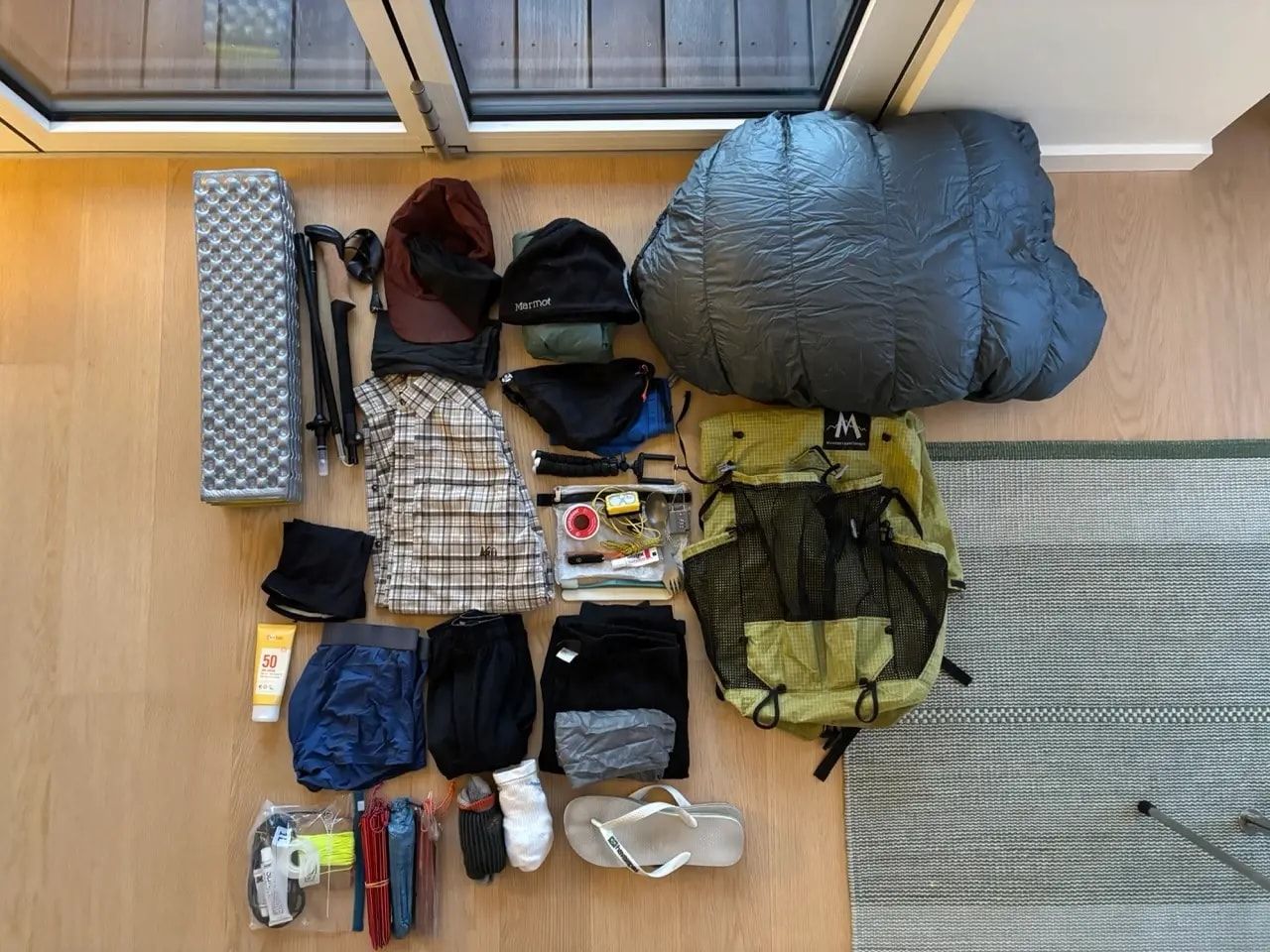
What to pack for the Fishermen's Trail is one of the most common questions hikers ask. A lot of packing advice for long-distance hiking is universal, but there are a few things that are particularly important here. This is not a definitive gear list - it's a set of tips based on what actually worked on the trail.
Water and hydration
You'll be hiking along the coast, often in full sun, from as early as March through to October. Some sections cross sand dunes where the exertion is higher than it looks. Plan to carry 2-3 litres of water on most days.
One thing that makes the Fishermen's Trail unusually easy in this regard is the water access. Towns appear regularly along the route, and you'll also find small water taps built into the trail itself. Cafés and restaurants will almost always refill your bottle if you ask. I considered bringing purification tablets or a filter and decided against it - and I was glad. The extra weight simply wasn't needed. If you're camping between towns you probably should bring a filter to be more flexible.
Footwear
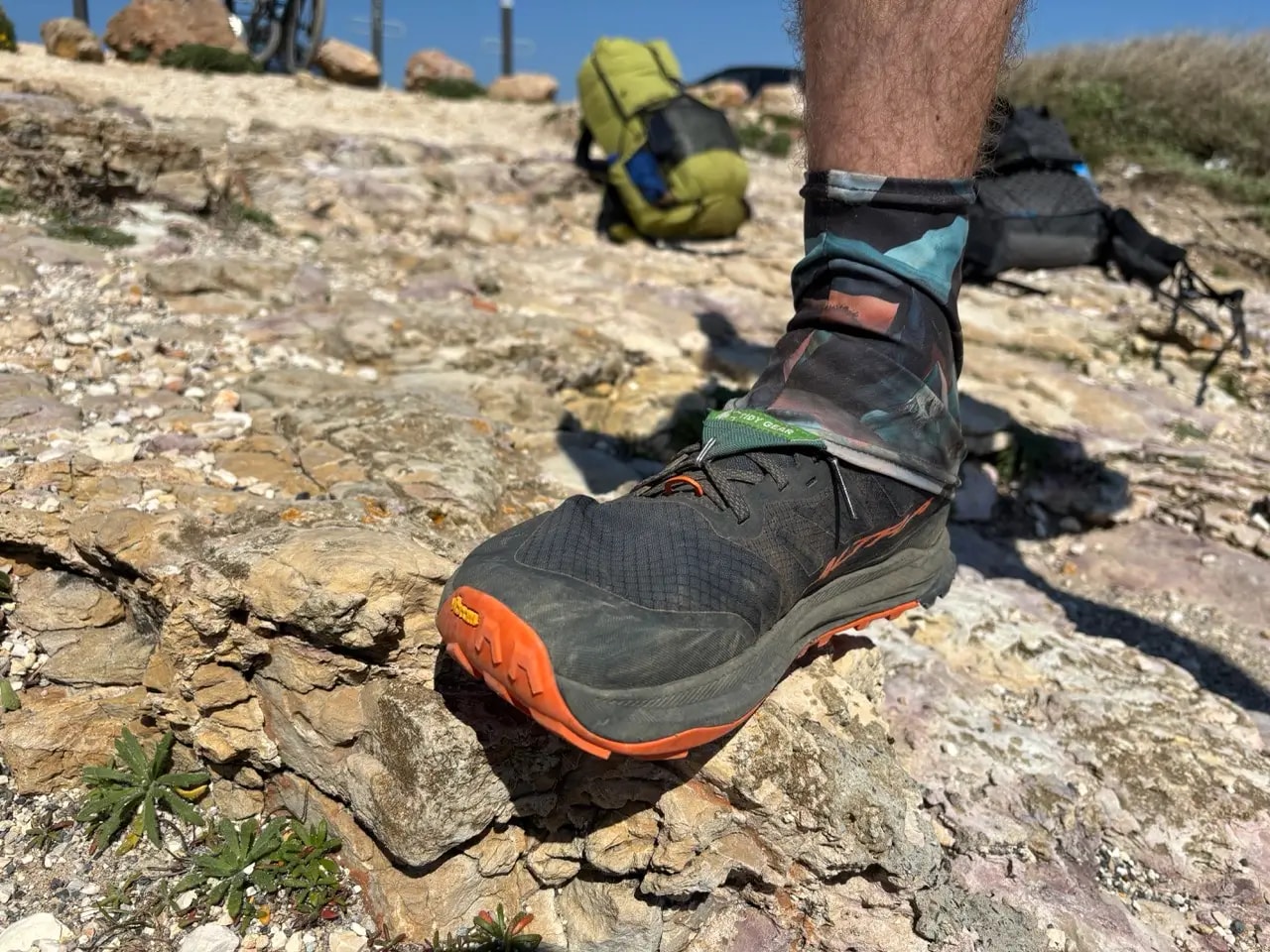
Trail runners are the right choice here. Lighter than hiking boots, and much easier when you're walking through deep sand. I hiked in the Xero Scrambler and was very happy with them - low drop, flexible, and they dried quickly.
Gaiters deserve a mention of their own. Sand will get into your shoes on almost every section of the trail. Without gaiters you'll be stopping every 30-45 minutes to empty them out. With gaiters, that problem disappears. They clip onto your shoes and take up almost no space in your pack - a small but genuinely high-impact item. See our 5 must-pack items article for a recommendation.
Sun protection
The trail is almost entirely exposed. You're walking along open coast with the Atlantic reflecting sunlight back at you for most of the day. Sun protection is not optional here. Sunglasses are a definite must. A sun hat - cap or wide-brim, depending on your preference - protects your face and neck. I also wore a buff, which I'd pull up under my cap for full coverage on the hottest stretches. That combination - hat, sunglasses, buff - covered everything and kept me comfortable in temperatures well above 25 °C.
Hiking clothing
Lightweight and quick-drying is the right approach. Synthetic hiking shirts work well - they dry fast, and many let you roll up the sleeves or unbutton the collar for extra ventilation on hot sections. For the lower half, a combination of shorts and leg skins works well. Leg skins give you UV protection on your legs while still letting air move. On cooler mornings or in breezy coastal sections, you get a bit of warmth too - then you can peel them off as the day heats up.
Clothing for town and camp
This is a broad category that comes down to personal taste and how much weight you're willing to carry. I brought a merino wool t-shirt for evenings in town and a pair of lightweight thermal long underwear that doubled as both sleepwear and casual trousers. If you're using a luggage transfer service you have more flexibility here. Flip-flops were one of my better decisions. After a full day in trail runners, giving your feet a break in camp or town felt great. They're light and the comfort they add is worth it.
Backpack
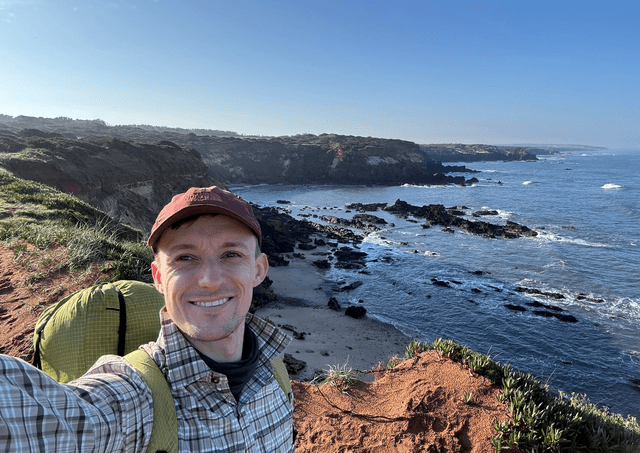
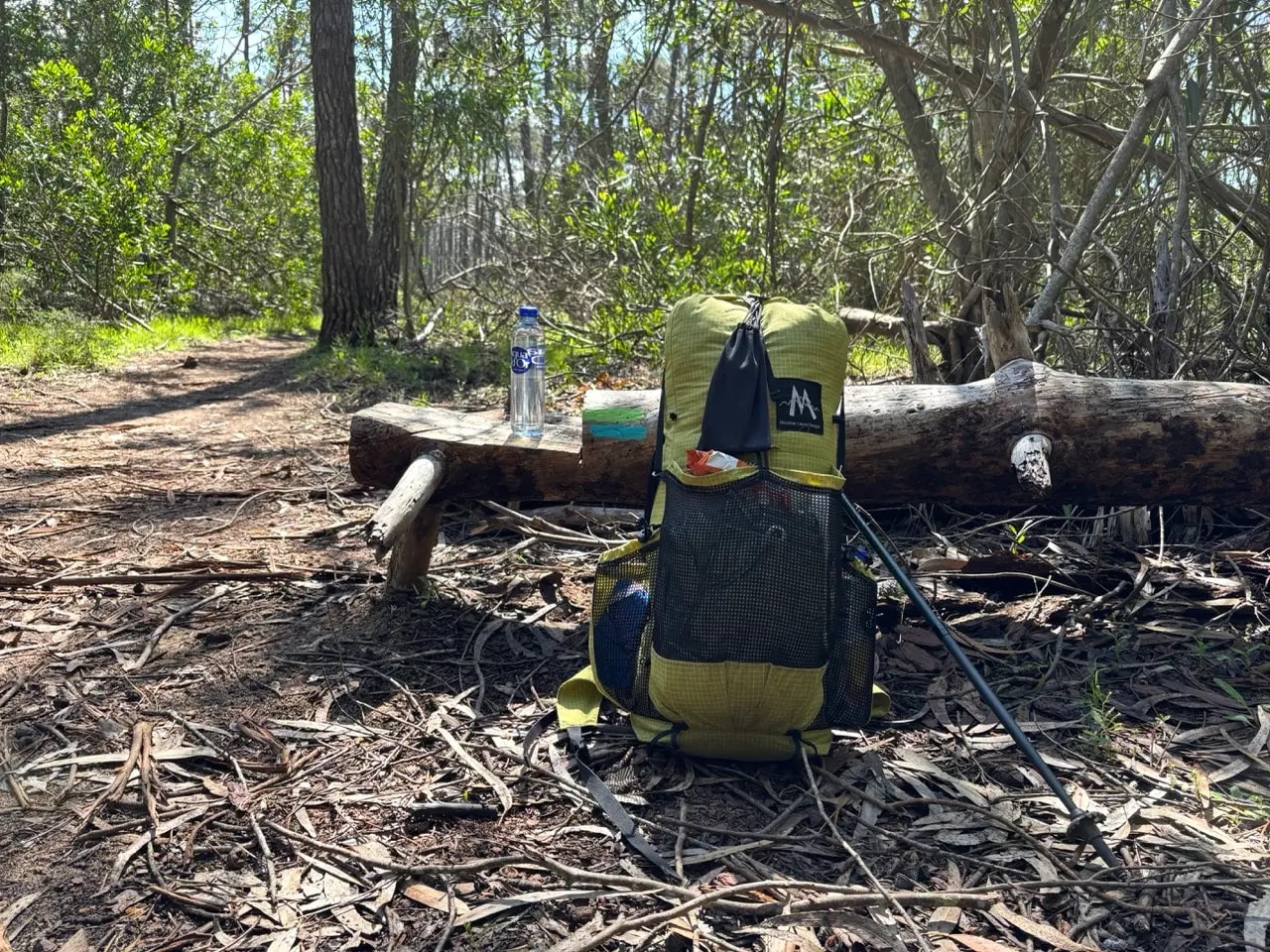
A 20-30 L frameless pack is enough for most setups, especially if you're staying in accommodation each night and not carrying camping gear. I prefer the minimalist frameless style - no internal frame means less weight and you can pack it exactly as you like. I also brought a small fanny pack and used it far more than expected. It was ideal for carrying valuables into town for dinner without bringing the full pack. A padlock is worth adding too - most hostels have lockers but don't provide the lock.
Camping gear
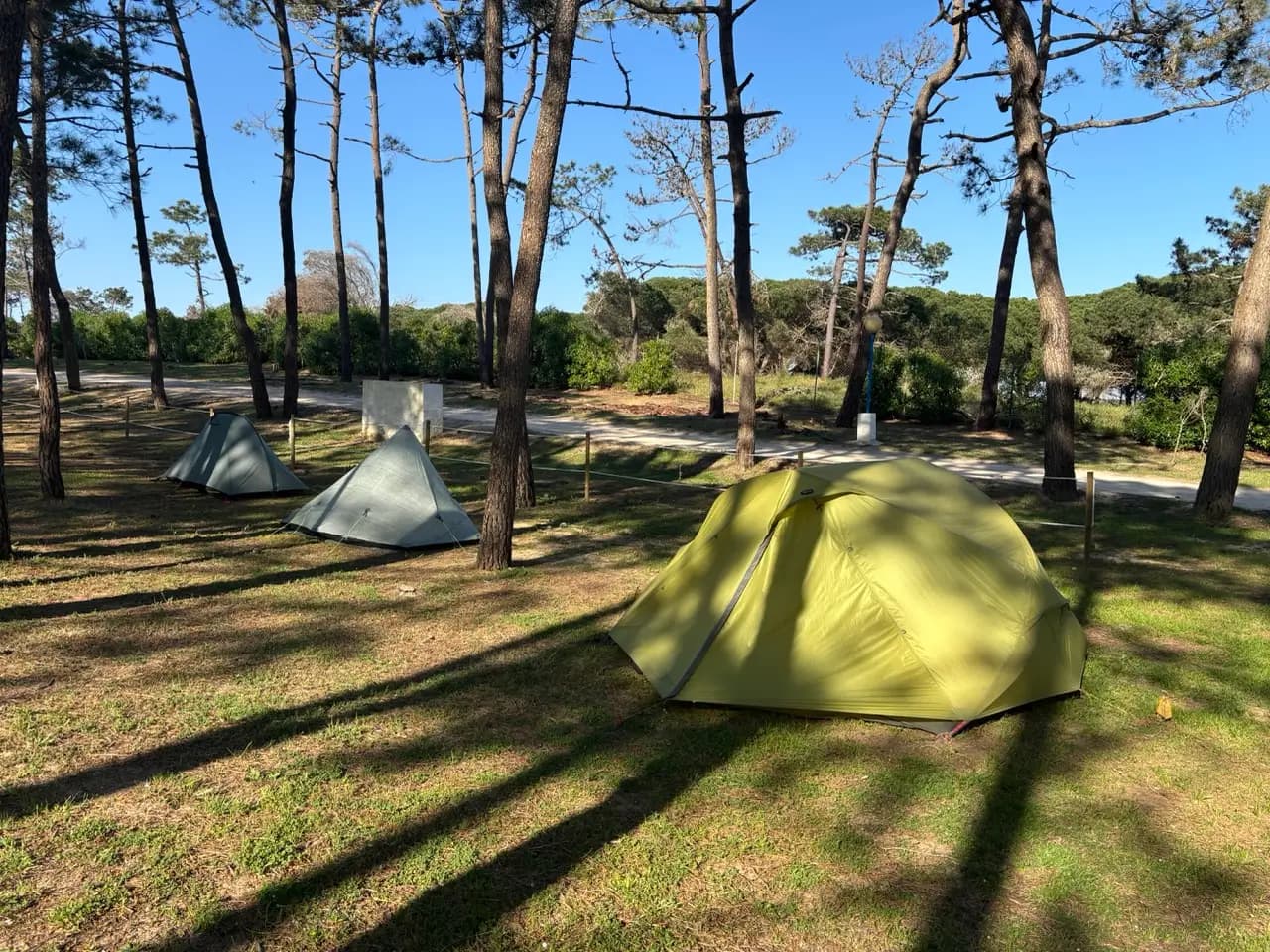
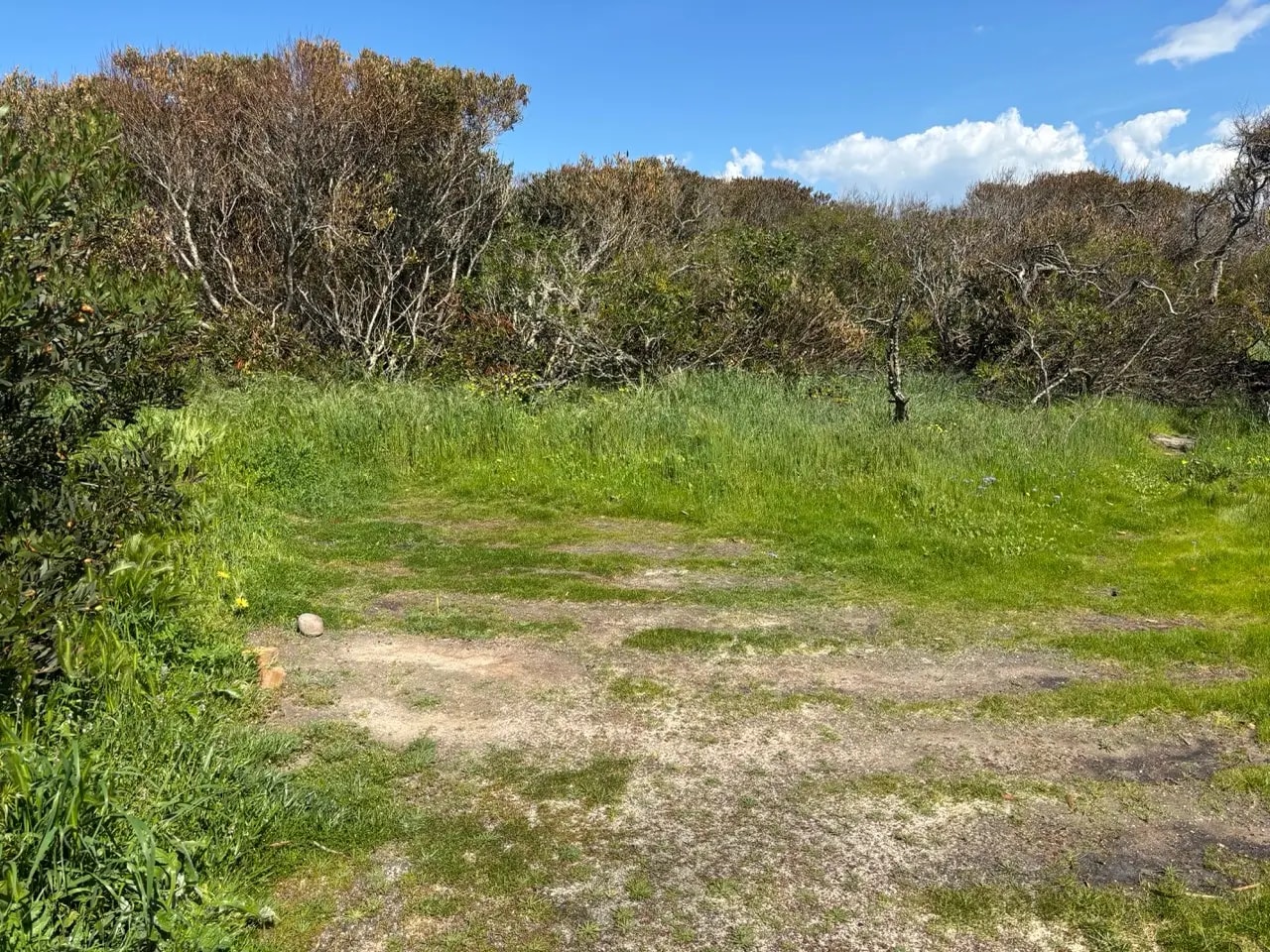
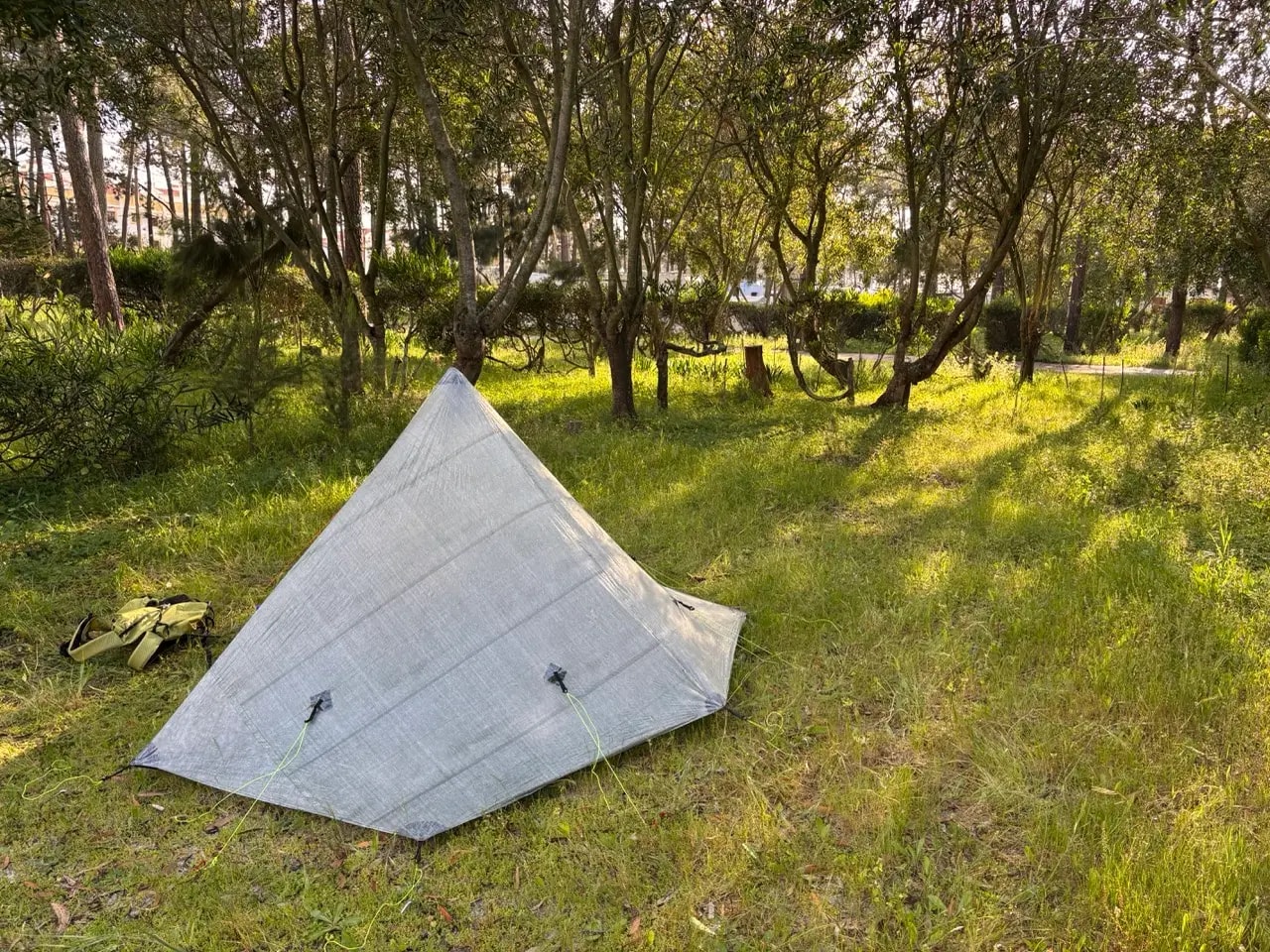
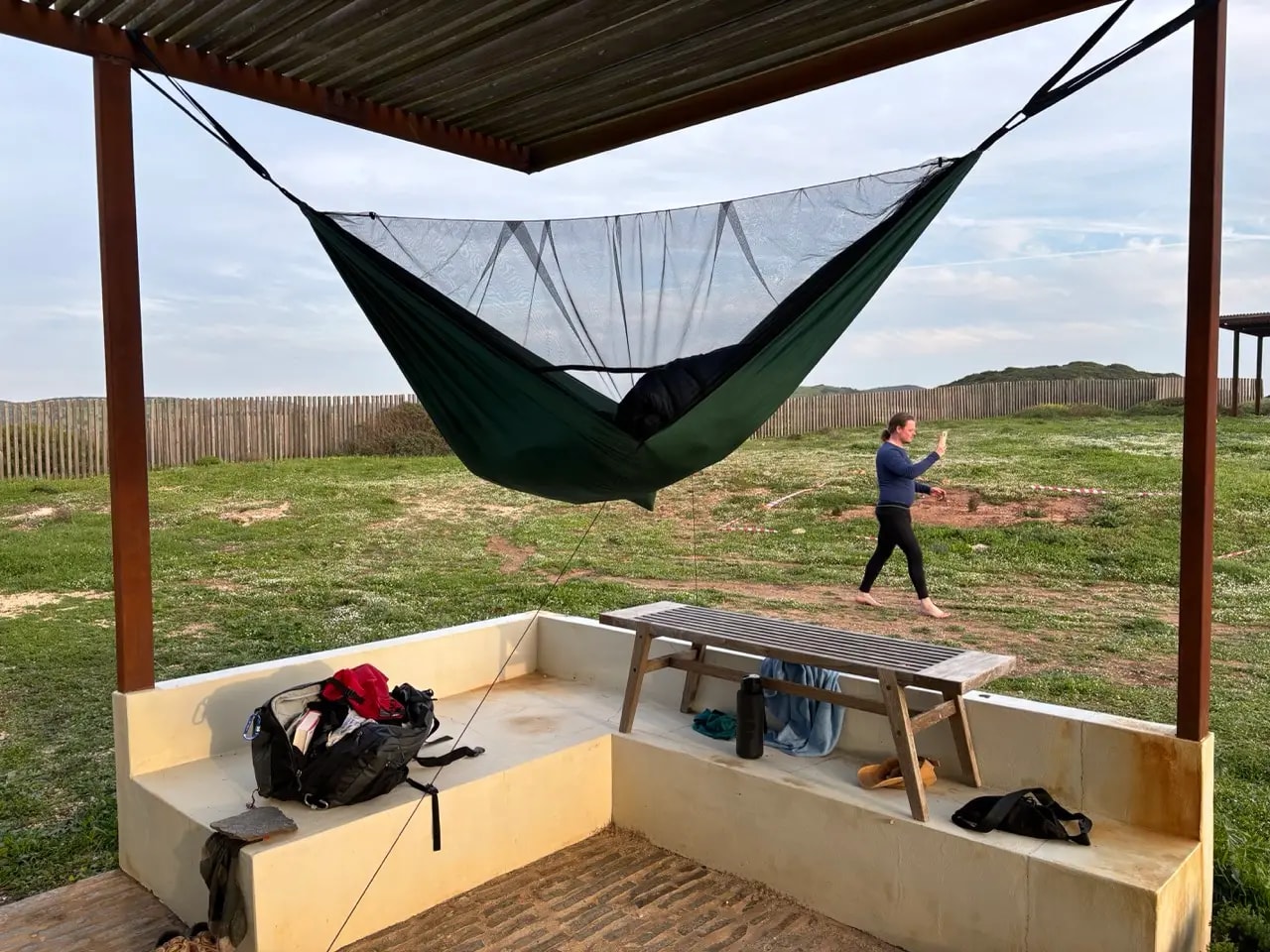
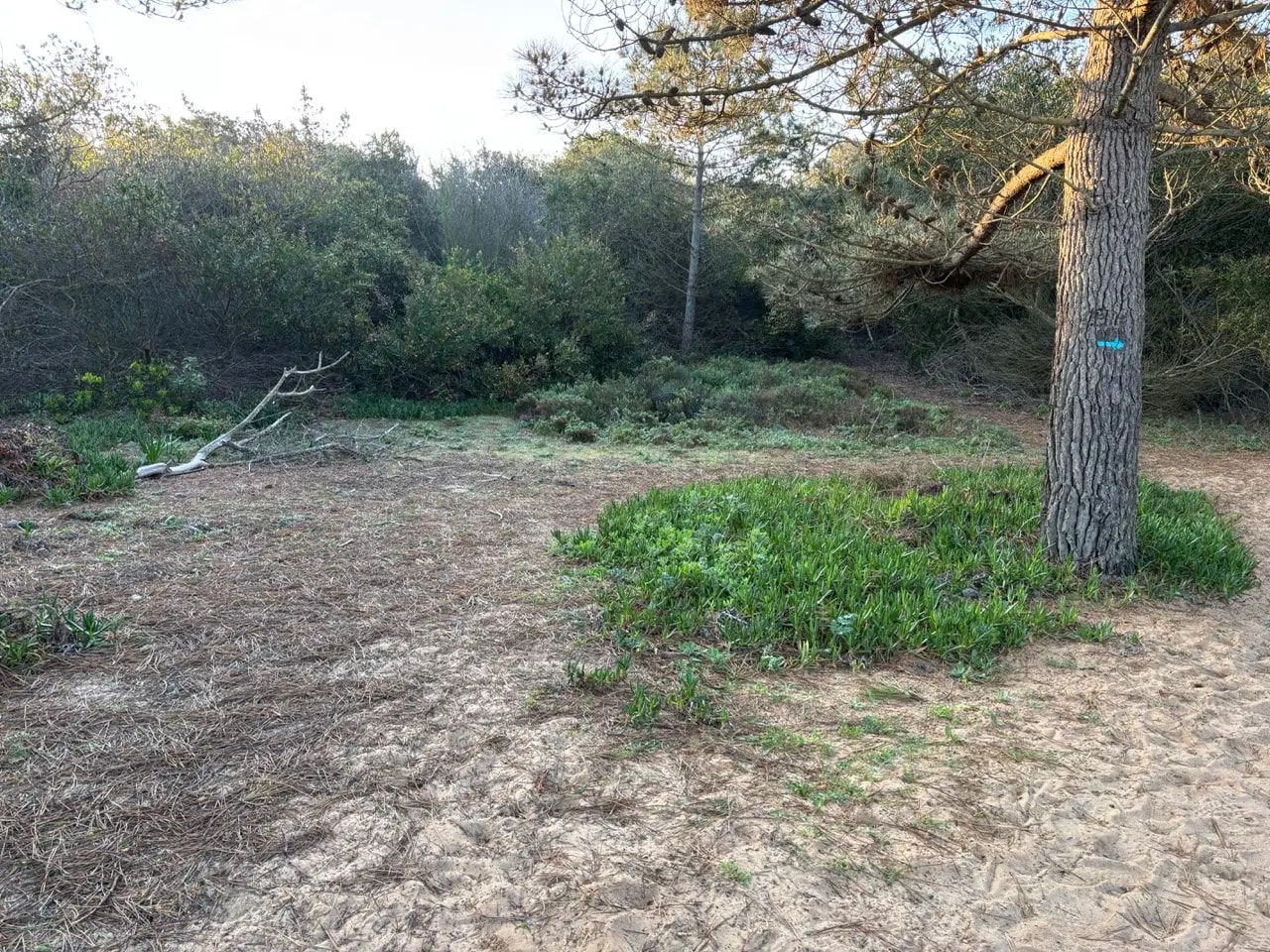
Wild camping is not permitted along the Fishermen's Trail since the coastline is a protected area. If you plan to stay at official campsites along the route, you'll need to carry shelter, a sleeping mat, and a sleeping bag. For the sleeping bag, a summer bag is enough - temperatures rarely drop below 10 °C, even in spring or autumn. Before the hike I read a lot of advice recommending freestanding tents due to the sandy ground. I went with my tarp and hiking poles and had no issues - I always found grassy patches to pitch on and never needed to stake directly into sand. One thing I didn't expect: condensation in the mornings was fairly heavy. Drying the tent out early each day became part of the routine.
For a more detailed look at camping on the trail, read our ultimate camping guide.
Electronics
A headlamp is worth packing even if you don't plan on hiking in the dark - it's useful for navigating inside a tent and on any early starts. I ended up doing one pre-dawn departure and was glad I had it. A power bank is a nice-to-have, but not essential. You're never in truly remote territory on this trail; cafés, restaurants, and guesthouses give you plenty of chances to charge your devices throughout the day. That said, a small power bank adds very little weight and removes any worry about running low.